Kickass Women

History is filled with women doing all kinds of kickass stuff.

Smart Girls

Watch these girls... they're going places!

Inspiration

Need a dose of inspiration? Here you go.

SRPS Entertainment

Some of my entertainment recommendations with awesome female characters and stars.

She's Crafty!

Some of the awesome items made by kickass women!

Showing posts with label latinas. Show all posts

Friday, January 26, 2018

Policarpa Salavarrieta - revolutionary heroine

Policarpa Salavarrieta (c. January 26, 1795 – November 14, 1817) was a spy for the anti-Spanish revolutionary movement in the early 1800s. Working as a seamstress in the homes of Loyalists, she was able to gather information for the insurgency. After evidence of her espionage was discovered on captured rebels she was executed for treason. Each year Colombia celebrates November 14  as the "Day of the Colombian Woman" in honor of this "heroína de la Independencia."


In 1817, the royalist elite in Nueva Granada (now Colombia) were desperately trying to hold on to their power and deploying troops to quash the insurgencies popping up around the country. Of course, they did this while holding tightly to their colonial lifestyle, with all the trappings of wealth -- beautiful homes, good food, and fine clothing. To maintain this level of decadence required staff. And, in the end, it would be the staff who would be their undoing.

An unassuming seamstress could easily overhear important discussions, watch the coming and going of visitors, and sneak undetected about the house in order to steal maps and other important documents, all under the guise of mending the family's clothing and linens. And that's exactly what Policarpa Salavarrieta did.

Her true name is unknown, but by the time she was spying for the revolution she went by Policarpa, or "La Pola," to hide her identity from the Spanish forces. As a child La Pola had been trained as a seamstress, and she used that to gain access to the homes of important members of the Spanish elite.

While the housewives who hired her may have thought of her as quiet and compliant, she was anything but. Like other household spies throughout history, she maintained a facade of discretion, when in reality she was making lists of names of major royalists, and documenting their plans. After work, she would deliver these lists to leaders in the rebellion.

When she wasn't mending laundry and spying on her employers, she was actively working for the revolution by passing messages between rebel groups, helping them buy weapons, and recruiting more support for their cause, often encouraging soldiers in the Royal Army to desert their posts and join the revolution.

La Pola knew the risks of what she was doing. Her devotion to the resistance was stronger than her fear of death. When her name was discovered on documents taken from captured rebels, she was charged with treason, and sentenced to stand before a firing squad. Even as she was being led to her execution, she refused to be silent, yelling her hatred for royalist rule and calling for the crowd of onlookers to avenge her.

In the end, the rebellion succeeded and Spanish rule ended. And Policarpa, a fighter who captured the heart of the people, became a celebrated heroine of the independence of Colombia. News of her death spread across the country, inspiring more to join the revolution. In 1967, the Congress of Colombia designated November 14, the date of her execution, as the Day of the Colombian Woman in honor of her bravery in the fight for independence.

I can't do the work of SRPS without your your support!
If you like what you read here, please share this post with your friends.

Tuesday, March 28, 2017

Smart Girls: the amazingly practical high tech portable shelter

Wanna hear an awesomely inspirational story about Latina high school girls using STEM to make the world a better place? Sure you do!

For the last year, the DIY Girls have been working on their idea to help the increasing number of homeless people in their community. In 2016, this team of 12 predominantly Latina girls from San Fernando High School Math/ Science/ Technology Magnet became the only all-female contingent of the 15 teams selected to participate in the Lemelson-MIT InvenTeam program, where each group receives a $10,000 grant to use their STEM skills to develop an invention to address a real-world problem.

The girls were concerned about the soaring number of homeless people in the Los Angeles area. In 2016, there was a 36% increase in homelessness in the San Fernando Valley, and they wanted to see if they could use technology to make a difference in the lives of people who were out on the streets. They came up with the ingenious idea of a portable, solar-powered shelter that could be set up quickly, secured from inside, and easily packed up into a backpack when not in use.


In addition to a chance to put into practice the STEM skills they're learning in class, they're also getting valuable hands-on experience in the invention process, working as a team, and promoting their project. The girls have organized themselves into different teams -- a structure team, a materials team, and a solar panel team -- each tasked with a different aspect of the project. As part of their design and feedback process, the girls recently presented their prototype to their school, members of their local MIT chapter, and several of their state representatives, and received resounding praise for its inventiveness.

Their tent is made of durable, insulating material, and features integrated solar panels and a battery pack that can power its various electrical devices including a small fan to provide circulation, a phone charger, white LED lighting, and UV lighting to disinfect and sanitize the tent. The goal is to create something inexpensive to manufacture, easy to distribute, self-cleaning, and portable would improve the lives of displaced people by giving them an alternative to sleeping on the streets. If successful, it's easy to imagine these tents also being used to provide temporary shelter to refugees and immigrants around the world.

Check out DIY Girls to learn more about their team
Check out their GoFundMe page to help them raise funds for a trip to MIT later this year
Watch a local news video featuring the girls

I can't do the work of SRPS without your your support!
If you like what you read, please share this post with your friends.

Monday, March 9, 2015

Graciela Olivárez

Graciela Olivárez (March 9, 1928 - September 19, 1987)

Graciela Olivárez was the first woman and the first Latina to graduate from Notre Dame Law School, in 1970, at the age of 42. This in itself is quite impressive. So when you consider that she was the daughter of a immigrant working-class family, and a high school dropout, it's truly remarkable. But it was also just another of the many amazing things this woman did during her lifetime as a civil rights and feminist activist.

She was born in Phoenix, and grew up in a small, ethnically divided mining company town during the Great Depression. She attended school and lived with her mother while her father traveled around Arizona, looking for work to support his family.

When she was 16 years old, her family finally moved to Phoenix during WWII so her father, a machinist, could find work in the factories. Graciela decided to drop out of high school, and instead take classes as a local business school while looking for work. She started out in the office of a real estate agent, working as a stenographer and translating for his Spanish-speaking clientele. Here, she met one of the operators of the local Spanish-language radio stations, KIFN, who talked her into taking a job working for them. By 1952, she was the director of women's programming, and she had become the first female disc jockey in Phoenix, filling the airways with music as well as advice on her program "Action Line."

Monday, October 13, 2014

Latin@ Heritage Month - Latinas in Space 4

This is the fourth in a series of posts about Latinas working in the Space Industry. As you can read the first, second, and third posts, there are Latinas working at or for NASA in a wide variety of roles -- doing science, designing equipment, etc. Here are four more smart Latinas to celebrate!

Laurie Y. Carrillo
Laurie Y. Carrillo is a Materials Engineer, currently conducting thermal analysis to support the development of the Orion Crew Exploration Vehicle, NASA's next generation spacecraft. She creates computer models to simulate the heating of a spacecraft from internal systems and external environment heating. For this, she uses her knowledge of orbital mechanics, heat transfer, materials, programming, and applied mathematics.

Laurie was born in San Antonio, Texas. Her father was a migrant farm worker, and her mother was the daughter of a trash collector. She attended Robert E. Lee High School in San Antonio, Texas, for two years, but spent her junior and senior years at the Texas Academy of Mathematics and Science, a residential program for students who are gifted in math and science, where she graduated in 1994. She then earned her BA in Mathematics and Computational & Applied Math, as well as a BS in Materials Science and Engineering from Rice University in 1998. In 2002, she received a MS in Aerospace Engineering, with an emphasis in Space Operations, from the University of Colorado. She returned to Rice University to complete her PhD in Mechanical Engineering. Her area study involved numerical radiative heat transfer at the nanoscale, with applications in space technology, nanorobotics, advanced energy systems, and high speed computing systems.

Her career at NASA started as an intern the summer after her freshman year at college. But her dreams about space started much earlier. She spent many evenings lying on towels alongside her cousins, looking up at the stars, listening while her grandmother told them stories. She was particularly fond of a story about Salina, a young girl who was taken up to heaven and allowed to touch a star. Later, when she saw a Sesame Street segment where Sally Ride launched Oscar the Grouch out of his trash can, she realized there was a place where she could go to work as an adult.

In 1998, she was hired as a flight controller. She spent the next five years in the Advanced Space Propulsion Lab conducting thermal analysis. She also served as the Development Project Lead for the Space and Life Sciences Astromaterials team, and as the Lab Manager for the Advanced Curation Laboratory at Johnson Space Center.

Over her career, she has received many awards, served on several prominent professional committees, and even was involved in the Space Generation Summit held at the World Space Congress. Laurie has been selected by the Society of Women Engineers to receive the Past Presidents Award based on outstanding academic achievement as well as strong engineering potential. She was chosen as a Hispanic Engineering National Achievement Award Conference/Daimler Chrysler Scholar in 2005 and 2008. She was selected as a Zonta International Amelia Earhart Fellow for 2006-07. In addition, Laurie led the Mexican American Engineers and Scientists Houston Professional Chapter to receive the highest award that a chapter could receive-Professional Chapter of the Year for 2001. "[A]ny time a Latina breaks a barrier, this opens the door for her to serve as a role model for those following behind. The more Latinas that enter technical fields, the more they will inspire younger generations of Latinas to consider these fields.”

Links: 
Laurie Y. Carrillo profile on Latina Women of NASA
Reaching for the Stars - Latinas at NASA


Pat Carreon
Pat Carreon is an electrical engineer who's worked at Goddard Space Flight Center and Johnson Space Center.
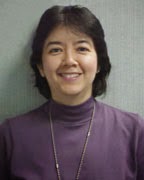
She was born in San Antonio, Texas, where she grew up honoring her roots in Mexico and Spain. She earned her BS in Electrical Engineering from Southern Methodist University, and her MS in Electrical Engineering from George Mason University.

While at Goddard, she was the network engineer for the Hubble Space Telescope Vision 2000 project. She also wrote flight software for the Gamma Ray Observatory and helped develop the Data Distribution Facility. In 1998, she transferred to Johnson Space Center, where she worked in the Missions Operations Directorate conducting operations research and strategic development. She also served as the lead for the development of the command servers and data archive server, supporting Shuttle and Space Station missions and simulators.

She is currently working with the Advanced Operations Cadre, reevaluating the way NASA performs operations on future missions and supporting the NASA Extreme Environment Mission Operations and Desert Research, where astronauts live in an underwater habitat, and Technology Study, where humans and robots are tested in an extreme desert environment in a meteor crater in Arizona.

She serves on the board reviewing proposals for newly designed launch vehicles, as well as examining the requirements necessary to return to flight space shuttle effort, and defining the future role of orbiters and crew exploration vehicles. She also spends time as a mentor for other NASA engineers through the Johnson Space Center mentorship program, as well as mentoring high school students interested in pursuing careers in engineering and science.

Links: 
Pat Carreon profile on Latina Women of NASA


Adriana Ocampo
Adriana Ocampo is a planetary geologist and the Science Program Manager at NASA.

She was born in Barranquilla, Columbia, on January 5, 1955. Her family moved to Buenos Aires, Argentina, while she was still an infant, and then again to Pasadena, California, when she was 15, in 1970. In 1983, she graduated with a BS in Geology from California State University, Los Angeles. She then went on to earn her MS in Planetary Geology from California State University, Northridge, in 1997, with a thesis on the Chicxulub impact crater in Mexico. The Chicxulub crater was the major factor that caused a mass extinction 65 million years ago on our planet. Ocampo and her colleagues also discovered the Aorounga Crater Chain in Chad in 1996. She completed her PhD at the Vrije Universiteit in Amsterdam in the Netherlands.

Starting in 1973 while she was still in high school, she volunteered at the California Institute of Technology's Jet Propulsion Laboratory, and returned as an employee during her summer breaks throughout college.

From 1998 to 2002, she worked as a Program Executive for Space Science missions, including missions with the European Space Agency, Russia, Japan, and Argentina. She also served as the desk officer for NASA's Office of External Relations working with Spain, Portugal, and Latin America.

From 2002 to 2004 she worked as a senior research staff member conducting research in comparative planetology of Solar System bodies. She was a member of the Mars Express Project Scientist Team, and worked to develop and implement the payload-commissioning plan. She also acted as the deputy project scientist for Venus Express, developing science operation architecture and an educational outreach plan.

In 2005, she was the Investigation Scientist for the Mars Odyssey Gamma Ray Spectrometer/High Energy Neutron Detector and the Mars Program Science Division and the Solid Earth and Natural Program.

In 1992, she received the Woman of the Year Award in Science from the Comisión Femenil. She also received the Advisory Council for Women Award at Jet Propulsion Laboratory in 1996 and the Science and Technology Award from the Chicano Federation in 1997. In 2003, she was selected among the 50 most important women in science by Discovery Magazine. She has served on the National Board of Directors and as the Chair of International Affairs Committee of the US Society of Hispanic Professional Engineers, working to establish technical programs of cooperation of university student exchange programs between the US and Mexico. She is a member of The Planetary Society Advisory Council, the Association of Women in Geo-sciences, the American Institute of Aeronautics and Astronautics, and the Society of Women Engineers mentoring young girls.

Links: 
Adriana Ocampo biography on Wikipedia
Adriana Ocampo profile on Latina Women of NASA


Berta Alfonso
Berta Alfonso is an electrical and computer science engineer who designed and developed computer hardware and software for projects supporting the Space Shuttle program and the International Space Station. She is currently serving as a University Affairs Office at Kennedy Space Center, leading educational programs connecting NASA with students and faculty around the world.

She was born in Cuba, but her family moved to the United States when she was six. She was enrolled in first grade without knowing any English. Fortunately, she found that math didn't have a language barrier. After high school, she earned her BS in Electrical and Computer Engineering from the University of Miami. She then went on to earn a MS in Systems Engineering and Management from the University of Central Florida.

She joined NASA as a Design Engineer, where her first design project was a circuit card to emulate the Payload Signal Processor, a shuttle flight box that sends commands to shuttle payloads. Her card was used to test payloads on the ground before being launched, to ensure things work properly once in space.

She has also worked on software used for processing the health and safety of Space Station modules. And she has designed a flight interface card to receive data for analysis while in flight.

She is now serving as the Lead for Eduction in many agency-wide project managed at Kennedy Space Center, effectively merging her two passions: education and engineering.

"Do research and tinker. Learn to use your library resources, and to find reliable information on the internet. Ask questions to people working in fields that interest you. Learn by doing! Remember: You don’t always have to be right. All you have to do is to be willing to learn."

Links: 
Berta Alfonso profile on Latina Women of NASA
Berta Alfonso profile on Mission Control website

Thursday, October 9, 2014

Latin@ Heritage Month - Latinas in Space 3

This is the third in a series of posts about Latinas working in the Space Industry. As you can read the first and second posts, there are Latinas working at or for NASA in a wide variety of roles -- doing science, designing equipment, etc. You can read four here.

As Michelle Madsen Camacho and Susan M. Lord note in their study and the follow up book, The Borderlands of Education: Latinas in Engineering, the low number of Latinas in STEM fields, and engineering in particular, is a matter of recruiting them in the first place. When a latina considers a degree in engineering, she has to be the one to show up to class after class filled with people who do not share her background. What is needed, they assert (and I agree), is a broader vision of what engineering looks like, and who is an engineer. To do this, we have to have more prominent role models for young women, and more public celebrations of diversity in STEM fields.

Dr. Marla Perez-Davis
Dr. Marla Perez-Davis is a chemical engineer who serves as Director for the Aeronautics Research Office at NASA Glenn Research Center in Ohio. [edit: In June 2016, she was named Deputy Director of NASA Glenn Research Center, serving under Director Dr. Janet Kavandi, the first woman in the top position.]

She earned her BS from the University of Puerto Rico, her MS from the University of Toledo, and a PhD from Case Western Reserve University. All three degrees are in Chemical Engineering.

In 1983 she was hired by NASA, and has worked at the Glenn Research Center for most of her career. She has served as Chief of the Electrochemistry Branch, managing the research and development projects related to electrochemical energy conservation and storage. Her teams were responsible for researching and developing component design, cell fabrication, testing, advanced system conception and evaluation of proposed projects.

She also served as the Research and Technology Lead in the Plans and Programs Office, evaluating high level NASA policies and planning for the Glenn Research Center, and designing and implementing appropriate plans and processes to ensure quality and effective research. Dr. Pérez-Davis was also responsible for planning, coordinating, directing and supervising the Project Liaison and Integration Office. In this position, her primary responsibilities included implementing, integrating and managing all phases of technical management and resources analysis, and controls.

During her illustrious career, she has received a number of awards, including the 2005 Distinguished Alumni Award - Alumni Association of University of Puerto Rico at Mayagüez, 2003 Women in Aerospace Award for Aerospace Awareness, 2001 Women of Color Technology Award for Career Achievement, and the 2001 Hispanic Engineer National Achievement Santiago Rodriguez Diversity Award. In 2009, Dr. Pérez-Davis was chosen as one of theHispanic Business Magazine's 25 Elite Women.

In addition to her duties at NASA, Dr. Pérez-Davis completed the Senior Executive Service Candidate Developmental Program in 2004. She also participated in the NASA Administrator’s Fellowship Program and served her tenure at the University of Puerto Rico at Mayagüez. She developed and implemented initiatives leading to K-12 teacher’s professional development and other outreach activities in Puerto Rico.

Links: 
Dr. Marla Perez-Davis profile on Latina Women of NASA
Dr. Marla Perez-Davis profile on NASA website


Amri Hernández-Pellerano
Amri Hernández-Pellerano is a Puerto Rican electrical engineer and scientist who designs, builds and tests the electronics that will regulate the solar array power to charge spacecraft batteries and distribute the power within it. She works out of the NASA Goddard Space Flight Center in Maryland. She designed the power systems electronics for various scientific spacecraft that have been launched recently, or will be deployed soon.

She grew up in Puerto Rico, where she performed well in school, and was especially fond of math and science classes. After high school, she entered the University of Puerto Rico at Mayagüez. While there, she applied to and was accepted into the NASA Cooperative Education Program, which enabled her to work with NASA scientist at Goddard while also earning school credit. She graduated with a BS in Electrical Engineering, and was hired full time at Goddard. While working at Goddard she completed her MS in Electrical Engineering from Johns Hopkins University.

In 1992, she joined the Power Systems Branch at Goddard. In 2003, she received the GSFC Engineering Achievement Award for her design of the Power Systems Electronics for the Wilkinson Microwave Anisotropy Probe mission, a NASA Explorer mission spacecraft which measures the temperature of the cosmic background radiation over the full sky with unprecedented accuracy. This map of the remnant heat from the Big Bang provides answers to fundamental questions about the origin and fate of our universe.

She is currently working on a variety of scientific spacecraft, including the Space Technology-5, the Solar Dynamics Observatory, the Lunar Reconnaissance Observer and the Aquarius/SAC-D missions. She is also the chair for the Hispanic Advisory Committee for Employees at Goddard, which serves as a liaison between NASA and its Hispanic employees on matters affecting their employment at Goddard.

Over her career, she has won numerous performances and team awards for her contributions in the area of Electrical and Power Systems Electronics, most notably the Goddard Space Flight Center Engineering Achievement Award and the NASA Exceptional Service Medal. And she was just awarded the 2014 Great Minds in STEM/HENAAC (Hispanic Engineer National Achievement Awards Corporation) Professional Achievement II.

Links: 
Amri Hernández-Pellerano profile on Latina Women of NASA
Amri Hernández-Pellerano biography on Wikipedia


Madeline Butler
Madeline Butler serves as the Deputy Senior Engineer of the Applied Engineering and Technology Directorate and the Data Systems Standards Manager at NASA's Goddard Space Flight Center in Maryland. She also serves as the Engineering Technical Authority for the Space and Ground Networks. She was selected to join five other NASA engineers to design and develop the communications infrastructure to support future missions to Mars.

She was born in Maricao, Puerto Rico. Even as a young girl, she was fascinated with space, and was always looking at the stars through her telescope. During the 1969 Moon Landing, she made up her mind to work for NASA, no matter what. In 1971, she earned her BS in Mathematics from the University of Puerto Rico at Mayagüez. And in 1977 she made her dream come true. She was hired to work at NASA Goddard Space Flight Center, and worked there for over three decades. In 1981, while still working at NASA, she earned a MS in Computer Science from Johns Hopkins University.

In her time at NASA, she has served in a wide variety of roles, including the Head of the Telemetry and tracking Systems Section, Project Manager for the Automation of the NASA Ground Terminal at White Sands, New Mexico, Senior Systems Engineer for the Mission Operations and Data Systems Directorate, and Head of the Mission Implementation and Technology Management Office of the Mission Operations and Systems Development Division, where she managed engineers responsible for mission data systems design, development, testing, operations and planning of NASA missions.

Over her amazing career, she received several prestigious awards. She was awarded the NASA Exceptional Achievement Medal in 1995 for the design of integrated science and mission control centers. She received the Silver Snoopy Award for outstanding support to Space Transportation System (Space Shuttle) Program, the Manned Flight Launch Awareness Honoree, Award of Merit, for the achievements in support of the manned space program, and the NASA Equal Opportunity Award for the contribution towards reaching the Equal Opportunity goals.

She was one of the first women from Puerto Rico to be hired to work at NASA Goddard Space Flight Center. To help foster opportunities for other Puerto Rican women at NASA, she has traveled there almost a dozen times to recruit more.

Links: 
Madeline Butler profile on Latina Women of NASA


Lissette Martinez
Lissette Martinez is the lead electrical engineer for the Space Experiment Module program at the Wallops Flight Facility, which is part of NASA's Goddard Space Flight Center.

She was born in Brooklyn, New York, but her family returned to Puerto Rico when she was still a child. In 8th grade, she had to study the moon for a class assignment. Every night for a month, she spent time on the roof of her house, taking notes and making observations about how it looked. This assignment set her on her course to study space in more detail.

After high school, she attended classes at the University of Puerto Rico at Mayagüez, where she studied Electrical Engineering. During her third year, she was able to participate in the NASA Cooperative Education Program which enabled her to partner with a NASA scientist while still earning school credit. She received her BS in Electrical Engineering in 1993, and was immediately offered a job at NASA as part of the team studying the Hale-Bopp comet.

She has also served as the electrical engineering support for the Code 870 Space Experiment Module (SEM) Program, an educational initiative to increase student access to space. She works out of the Wallops Flight Facility in Virginia. Her duties include testing ground and flight hardware. When she's not busy doing that, she works with students from around the world, helping them develop science experiments that travel into space with astronauts.

Links: 
Lissette Martinez biography on Wikipedia
Lissette Martinezprofile on Latina Women of NASA

Monday, October 6, 2014

Latin@ Heritage Month - Latinas in Space 2

This is the second in a series of posts about Latinas working in the Space Industry. As I mentioned in the first post, there has only been one Latina who has gone into outer space: Ellen Ochoa. But there are far more Latinas who work at or for NASA. And while the goal of having more Latinas in space is an excellent one, it's far more important to celebrate the women working on the ground -- doing science, designing equipment, etc. You can also read posts three, and four.

To encourage more young Latinas to pursue a career in STEM, it's important tell the stories of those who've come before them. Representation matters! As Dr. Patricia Gándara, The Civil Rights Project at UCLA, says in this excellent video from the Eva Longoria Foundation, "there is often a lack of role models in these communities -- somebody who has already gone to college and been pretty successful in one area or another."

Monday, September 29, 2014

Latin@ Heritage Month - Latinas in Space!

This is the first in a four-part series of posts about Latinas working in the Space Industry. You can read posts two, three, and four. There is only one Latina who has gone to space (so far), but there are many more working on the ground as engineers and scientists with NASA. Their stories are just as important and inspiring for young women looking at a career in STEM. And, as we saw in the recent LatinaStyle article, we desperately need more young Latinas in STEM careers.
According to the U.S. Bureau of Labor Statistics, a million new jobs are created every year in Science, Technology, Engineering and Math–better known as STEM– and by 2022 there will be nine million STEM jobs available. Although the U.S. Census Bureau states that Latinos are the largest growing minority group in the country, labor statistics demonstrate that Latinas only have two percent of all the STEM jobs currently in the U.S.; it remains a field dominated by white males.
I don't intend this to be an exhaustive list by any means. Simply an opportunity to highlight some of the amazing women working in the space program.

Ellen Ochoa
Ellen Ochoa was the first Latina in space. But that's only one of her many achievements in her career with NASA.

She grew up at a time when space exploration was just beginning. She excelled in school, in both the arts and sciences, but as as a girl she never dreamed of becoming an astronaut herself. She actually thought she'd grow up to be a professional musician. It wasn't until her friends encouraged her to take a closer look at Physics as an option.

She was hooked. Her love of math and science became her route to trying to figure out the world around her. She earned a BS in Physics from SDSU, and then a MS and PhD in engineering from Stanford. It was while she was studying at Stanford that Sally Ride joined the astronaut team, and a whole new world opened up for young women like her. She immediately began pursuing a career with NASA, joining the NASA research team studying optical systems. In fact, she is a co-inventor on three patents relating to optical systems.

In January 1990, she was selected by NASA for the astronaut program. Her first flight was aboard the shuttle Discovery in 1993. By the time she returned from her last mission she'd logged almost 1000 hours in space.

In 2002, she became Deputy Director of Flight Crew Operations, and in 2006, she was promoted to Director. She has also served as the Chief of Intelligent Systems Technology at Ames Research Center. But most recently, in January 2013, she became the first Latina and second woman to be appointed as Director of the Lyndon B. Johnson Space Center in Houston, Texas.

In addition to being the head of Johnson Space Center, she is also a classically trained flutist and a private pilot.
“I am committed to space flight, human exploration, learning how to do more and more. I like the fact that it is much bigger than myself, important to my country and to the world. I like being able to contribute in this way.”
Links: 
Ellen Ochoa biography on Wikipedia
Ellen Ochoa biography on NASA website
Ellen Ochoa profile on American Physical Society website


Serena Auñón
Serena Auñón is the second Latina to become a NASA astronaut.

Serena Auñón earned a BS in Electrical Engineering at George Washington University, and then an MD at the University of Texas Health Science Center in 2001. That might seem like an abrupt change in course. She explains she wanted to be able to apply the critical thinking skills she learned as an engineer to helping people. Medicine is her passion. She served her two residencies in internal medicine and aerospace medicine. She also earned a Master of Public Health degree in 2006.

She joined NASA as a flight surgeon, and in 2009 was selected as an astronaut candidate. Although she has yet to have her chance at space travel, she is a key person on the support team for the latest group of astronauts and cosmonauts heading to the International Space Station. She uses her medical expertise to support astronauts in space as well as helping to design equipment and technology.

In 2012, she piloted a DeepWorker 2000 submersible as part of a NASA/NOAA NEEMO 16 underwater exploration mission off the coast of Florida.
"Always follow your passion. If you go down a path you think others want you to follow, you'll be miserable. What you love is your passion, and everything else will work out."
Links: 
Serena Auñón biography on Wikipedia
Serena Auñón piece on NBCLatino.com


Candy Torres
Candy Torres is a strong advocate for girls, and especially Latinas, pursuing a career in STEM.

She grew up in South River, New Jersey. She knew early on that she wanted to be an astronaut, but being a Puerto Rican girl in the '60s, that wasn't necessarily in the stars. She had to confront the prejudices of the day, but she was determined to not let it get in her way. While she waited for her chance, she devoured as much science fiction as she could to keep her dream alive. She was mesmerized by the use of technology to solve problems in shows like SuperCar, Outer Limits, Twilight Zone, and, of course, Star Trek.

At the age of 14, she joined the Civil Air Patrol where she learned marching, drilling and wilderness survival. Oh, and she learned to fly a plane. She graduated from high school in 1971, and attended classes at Douglas College (now part of Rutgers), where she managed to cobble together a self-made major in space sciences from classes in vastly different fields such as geology, engineering, and astronomy. It was her professor in astronomy that helped her land her first job after graduation, working on the Copernicus OAO-3C Satellite at Princeton. From there, she was hired to convert large data files for NASA. The work was being done by hand, and was time consuming and quite boring. Torres, ever the innovator, taught herself FORTRAN so she could write a program to do the conversions in a more systematic way.

In 1983, she drove for 21 hours to be on site when Sally Ride made her historic journey into space. She knew that this would be an important opening for other young women to join the space program. And then, only a few weeks later, she was offered her dream job: a contractor position with McDonnell Douglas working on the software for the Space Shuttle program. Since then, she has also worked on projects supporting the International Space Station.
"I had a very curious mind, and I was not willing to let go of that."
Links: 
Candy Torres biography on STEMWomen.net
Candy Torres biographical piece on CNN
Candy Torres piece in The Atlantic


Dr. Nitza Margarita Cintrón
Dr. Nitza Margarita Cintrón is the chief of NASA Johnson Space Center Space Medicine and Health Care Systems Office. What started out in 1979 as a two year plan to create the Biochemistry Laboratory turned into a full-fledged career spanning three decades.

Born in Puerto Rico, she traveled often during her childhood, following her Army father around the world. After his retirement, the family settled in Puerto Rico, where she excelled in school, and was a self-driven learner when it came to the sciences and math. Even at an early age, she dreamed of being a scientist. She earned a BS in Biology from the University of Puerto Rico, and in 1972 entered the Biochemistry and Molecular Biology program at Johns Hopkins University School of Medicine, earning her PhD there in 1978.

She applied to the Astronaut Corps and passed the finals, but poor eyesight limited her to earth-bound work. But it was her academic credentials that impressed the folks at NASA, and they offered her a position as a NASA scientist. In addition to her work on the Biochemistry Laboratory, she also served as the project scientist on the Space Lab 2 mission as part of the shuttle Challenger launch in 1985.

NASA sponsored her studies at the University of Texas Medical Branch in Galveston, where she graduated in 1995 with her MD, specializing in internal medicine. She was named the director of the Life Sciences Research Laboratories in support of medical operations, a position that enabled her to continue to focus on both the science and medical aspects of space travel.

She was awarded the Medal for Exceptional Scientific Achievement, the highest science honor given by NASA. And in 2004, she was inducted into the Hispanic Engineer's National Achievement Awards Conference Hall of Fame in Los Angeles.
"In everything you do, always do you very best, be your very best. Everyone has skills and talents, and if you do your very best with them, you will always be a winner."
Links: 
Nitza Margarita Cintrón biography on Wikipedia
Nitza Margarita Cintrón biography on Latina Women of NASA