Kickass Women

History is filled with women doing all kinds of kickass stuff.

Smart Girls

Watch these girls... they're going places!

Inspiration

Need a dose of inspiration? Here you go.

SRPS Entertainment

Some of my entertainment recommendations with awesome female characters and stars.

She's Crafty!

Some of the awesome items made by kickass women!

Showing posts with label smart girls. Show all posts

Monday, May 7, 2018

Science Fair Rock Stars: Mikayla Sharrieff, India Skinner, and Bria Snell

High school juniors Mikayla Sharrieff, India Skinner, and Bria Snell have been in the news quite a bit in the last week, but the articles have only barely touched on what I consider to be the really exciting part of their story: these smart girls came up with an inexpensive and easy way to filter lead out of drinking water! And not only lead, but other impurities and bacteria like e. coli.


Their creative system builds on NASA Spinoff technology using specially created filtering floss made from nanofibers. A spinning fan circulates the contaminated water through the floss, which traps the unwanted particles. The clean water is then transferred to the storage container.

Their project "From H2NO to H2O" earned them a spot in the finals of the 2018 NASA Transformers Optimus Prime Spinoff Promotion and Research Challenge (OPSPARC) contest, which was created to encourage students to come up with creative uses for existing NASA technology in projects that would benefit the general public. Mikayla, India, Bria decided to turn their attention to the problem of lead-contamination in school water fountains.

Tragically, contaminated drinking water is an everyday issue for far too many students around the country, and one that hits home for these three burgeoning scientists: their school, Benjamin Banneker High School in Washington, DC, has several drinking fountains that have been taken out of commission because of concerns regarding lead contamination.

They took their idea to their mentors at the Inclusive Innovation Incubator, a technology incubator whose mission is to support entrepreneurs and businesses from underrepresented communities that provide products and services benefiting under-served communities, who gave them the encouragement and guidance they needed while building their prototype for the NASA OPSPARC contest. Their mentors' confidence is well-placed. This team of resourceful young women are the only all-black, all-female team to make it to the finals.

The winning team will be announced later this month. Winners will be invited to NASA's Goddard Space Flight Center for a two-day workshop, and a $4000 stipend to cover their expenses for the trip. But these girls are already winners! They've caught the attention of celebrities and politicians alike. The Washington, DC, mayor Muriel E. Bowser has pledged a $4000 award to help the girls continue work on their filtration system.

Not only are these young women looking at careers in STEM, they're already looking for ways to inspire others. As Mikayla, who is looking at becoming a biomedical engineer, put it, "It’s important to be role models for a younger generation who want to be in the STEM field but don’t think they can." India, who wants to be a pediatric surgeon, wants to make sure others see their full potential, to "see our faces, and see we’re just regular girls, and we want to be scientists."

If you appreciate the work I do here on SRPS, please support me!

Tuesday, March 28, 2017

Smart Girls: the amazingly practical high tech portable shelter

Wanna hear an awesomely inspirational story about Latina high school girls using STEM to make the world a better place? Sure you do!

For the last year, the DIY Girls have been working on their idea to help the increasing number of homeless people in their community. In 2016, this team of 12 predominantly Latina girls from San Fernando High School Math/ Science/ Technology Magnet became the only all-female contingent of the 15 teams selected to participate in the Lemelson-MIT InvenTeam program, where each group receives a $10,000 grant to use their STEM skills to develop an invention to address a real-world problem.

The girls were concerned about the soaring number of homeless people in the Los Angeles area. In 2016, there was a 36% increase in homelessness in the San Fernando Valley, and they wanted to see if they could use technology to make a difference in the lives of people who were out on the streets. They came up with the ingenious idea of a portable, solar-powered shelter that could be set up quickly, secured from inside, and easily packed up into a backpack when not in use.


In addition to a chance to put into practice the STEM skills they're learning in class, they're also getting valuable hands-on experience in the invention process, working as a team, and promoting their project. The girls have organized themselves into different teams -- a structure team, a materials team, and a solar panel team -- each tasked with a different aspect of the project. As part of their design and feedback process, the girls recently presented their prototype to their school, members of their local MIT chapter, and several of their state representatives, and received resounding praise for its inventiveness.

Their tent is made of durable, insulating material, and features integrated solar panels and a battery pack that can power its various electrical devices including a small fan to provide circulation, a phone charger, white LED lighting, and UV lighting to disinfect and sanitize the tent. The goal is to create something inexpensive to manufacture, easy to distribute, self-cleaning, and portable would improve the lives of displaced people by giving them an alternative to sleeping on the streets. If successful, it's easy to imagine these tents also being used to provide temporary shelter to refugees and immigrants around the world.

Check out DIY Girls to learn more about their team
Check out their GoFundMe page to help them raise funds for a trip to MIT later this year
Watch a local news video featuring the girls

I can't do the work of SRPS without your your support!
If you like what you read, please share this post with your friends.

Wednesday, March 22, 2017

Smart Girls: smashing stereotypes, one robot at a time

The really cool thing about being a self-rescuing princess is that you get to do sooooo many super fun things, and never care whether they've been deigned "for girls" or "not for girls" by some stuffy old windbags acting as the Gender Police. Fun stuff like building robots to take over the world! Mwahahaha!

Oh, wait... I mean... not take over the world. Just fun, friendly little robots that scoop up balls and throw them into baskets. Yeah. That's totally what I meant.

But seriously, check out these six smarties, the Rubies, and their awesome AND adorable robot! Left to right: Ava, Rachel, Adelaide, Izzie, Isabella, and Mitra. Together, they make up the Rubies FTC Team #9890, the first all-girl robotics team from Minneapolis, Minnesota. As part of the Velocity Vortex challenge, they compete against other students their age, as each team designs, builds, and programs a robot to play a floor game against other teams’ robots. It's a challenge that requires a wide variety of skills: STEM skills like engineering, physics, math, coding, and the link; but also social skills like marketing and outreach as each team needs to build a network of sponsors and supporters.


The Rubies go into each season with the goal of squashing the assumption that girls in robotics are only good at the social skills. "We want to show that with hard work and persistence, a girl’s team can compete, achieve success and earn respect for both technical and management skills." These girls have been working together for several years, starting out in the Lego League before aging into the FIRST Tech Challenge (FTC) program two years ago. They are now in the middle of their second season, and are already winning high praise and awards! In their first tournament this season they came in second over all in the qualifying matches, and were captains of the winning alliance. In their second qualifying tournament, they came in first!

These girls aren't just about winning, though. They're dedicated to encouraging other kids to join the fun of robotics. This year alone, they've mentored five new robotics teams and run regular "Robotics 101" workshops, all while they prepared for competitions themselves. "​As the first all-girls FTC robotics team from Minneapolis, we are dedicated to empowering young women in engineering and spreading robotics programs to people who previously lacked the resources to participate."

Check out their website, or follow them on social media: Twitter, Facebook, and Instagram.
Check out this great story featuring the Rubies and another all-girl team, the Ponytail Posse.

Photo source: Jerry Holt, Star Tribune

If you like the work I do here on SRPS, please support me!

Friday, November 25, 2016

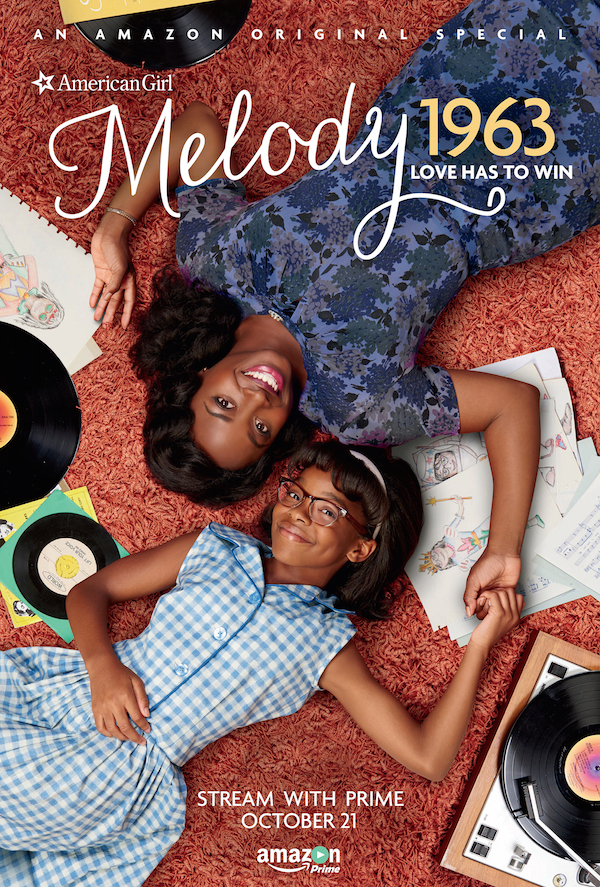
An American Girl Story - Melody 1963: Love Has to Win

A couple of months ago I saw an article or two about the newest American Girl doll, Melody, and the excitement over a second African American girl in the series. Honestly, I didn't think too much about it other than it seemed like a positive step toward inclusivity, which is always cause to celebrate, and to be happy that her story was set in the 1960s in Detroit -- an era and location I've long been interested in. I only knew about the American Girl phenomenon by hearing people talk about getting things for their kids or grandkids. Part of me was curious to know more about what attracted girls to the dolls and their stories. But I hadn't had an opportunity to really explore it myself.

So when An American Girl Story - Melody 1963: Love Has to Win came up as a recommendation after I finished watching Just Add Magic, I was intrigued. I added it to my queue for some rainy day when watching my usual shows wouldn't quite cut it. I'd never seen or read any of the American Girl stories, but figured if they're geared for the same audience they market their dolls to, it might be a nice change of pace. One day last week, when it was cold and gray and I needed something optimistic, I decided to give it a try. I snuggled up with a comfy blanket, a cup of tea, and some delicious cookies and let this be my introduction to the whole American Girl phenomenon.

And you know what? It was quite enjoyable. And educational. I don't know what I expected, but I was pleasantly surprised at how quickly I was drawn into Melody's story. She is the heroine of the film, as she begins the exciting and sometimes painful process of growing up in troubled times.

Friday, October 28, 2016

SRPS TV Night: Just Add Magic

Three girls find an ancient magical cookbook and through the recipes inside they learn about the power of love, the value of friendship, and the importance of being yourself.

I don't watch a lot of television geared toward the tween set, but when this popped up in my Amazon recommendations I was intrigued. I love cooking and magic and empowering young women, so it seemed like it might be something I could enjoy.

And you know what? It is!

Just Add Magic is the perfect blend of thrilling and charming -- something quite rare these days when shows are either gritty and realistic or saccharine sweet. It doesn't resort to cringe-worthy sitcom set-ups or jokes you can see coming a mile away. It's actually quite enchanting while also being quirky and fun.

The basic premise: Kelly Quinn and her two BFFs, Darbie and Hannah, find an old cookbook in the attic that used to belong to her grandmother, who has become strangely silent over the last couple of months. They quickly learn this cookbook is not for making ordinary dishes -- it's full of magical recipes and mysterious clues. And they hope it will be the key to solving the mystery of Kelly's grandmother's illness... or curse.

But nothing is easy when it comes to magic. These recipes bring a new sense of power, but at a price.

Friday, September 30, 2016

SRPS Movie Night: Queen of Katwe

It's been a while since I have been able to make it to a new movie on its opening day, but I made it a point to clear my schedule for today. I absolutely had to go see Queen of Katwe today! I even went to the every first showing just so I could come home and tell you all what I thought about it.

Short version: I loved it! Go see it!


Long version: Queen of Katwe is the captivating story of how Phiona Mutesi became the first female chess champion of Uganda. It's the inspirational story about how miraculous things can happen when the right people are in the right place at the right time, as well as the painfully honest accounting of exactly how much hard work and determination is required to make those miracles happen.

I honestly never thought I'd find a film about chess so compelling, but here I am raving about it online. My favorite scenes are those where Phiona is sitting across the table from someone who underestimates her, and the look she gets on her face when she knows she's going to win. It's the look of ultimate secret delight knowing they just walked into her trap, and now all she has to do is squeeze. Before the even know what's happening, she's finished the game in her head and is just waiting for real life to catch up.

Of course, this film is about more than chess. Or, more accurately, it's about how chess is a metaphor for life.

Tuesday, September 27, 2016

Google Science Fair Winner Kiara Nirghin!

Congratulations to Kiara Nirghin, the Grand Prize winner in the 2016 Google Science Fair!


I am not at all surprised this brilliant young scientist won! Her remarkable project was the first one I reviewed for this year, and I was struck by its simplicity and the amazing potential it has to improve the lives of farmers around the globe adapt to increasingly dry conditions. When asked what could she make better with science, she looked around her and saw poor farmers struggling to bring in enough crops to stay in business, and she wondered if there was something she could do to help.

In her project "Combating Drought with a Low-Cost, Biodegradable Superabsorbent Polymer Made Out of Orange Peels," she shares her research looking for a low-cost, biodegradable, water-storing polymer that can be added to the soil to help retain moisture during periods of drought.
"I sought to create a product that can improve soil quality, preserve water and resist drought therefore producing a better environment for crops grow. It is must be harmless and non-polluting with super water absorbing ability and water preserving ability."
Like all of this year's contestants, she followed her natural curiosity and used her scientific know-how to figure out a way to make something better, and in the process discovered something pretty remarkable that can have a long-lasting impact on the environment as well as the lives of people around the world.

Brava Kiara!


If you like the work I do here at Self-Rescuing Princess Society,
please consider donating to my Patreon.

Sunday, September 25, 2016

Science Fair Rock Star: Anushka Naiknaware

This is the eighth in an ongoing series highlighting some of the amazing young women participating in the 2016 Google Science Fair. (Here are the first, second, third, fourth, fifth, sixth and seventh posts.) Each of these smart young scientists has survived both the rigorous first pass and the second regional round, and have been named Global Finalist, meaning they have moved into the final round of competition. You can be sure I'll be watching the celebration event on September 27, 2016.


Wound care is a critical part of health care, but one that too often gets overlooked in research in favor of bigger, more prestigious endeavors like cancer detection or treating heart disease. But the number of people treated for wounds far outpaces those who need most other kinds of health care. And while it might seem like clinicians are simply wrapping a wound to protect it, there is far more going on underneath the bandage than a little ointment and cotton gauze.

Anushka Naiknaware, 13, knows that effective treatment of wounds involves balancing several different but interdependent goals: stopping any bleeding, absorbing any excess fluid, addressing signs of infection, and keeping the wound at the optimum moisture level to heal quickly and cleanly. To that end, she's created a bandage with a built-in sensor to do all of these things.

Thursday, September 22, 2016

Science Fair Rock Star: Maria Vitória Valoto

This is the sixth in an ongoing series highlighting some of the amazing young women participating in the 2016 Google Science Fair. (Here are the first, second, third, fourth and fifth posts.) Each of these smart young scientists has survived both the rigorous first pass and the second regional round, and have been named Global Finalist, meaning they have moved into the final round of competition. You can be sure I'll be watching the celebration event on September 27, 2016.


Do you know someone who is lactose-intolerant? Sixteen-year-old Maria Vitória Valoto of Brazil does -- her father -- and he inspired her to find a way to help others with the same condition.

Dairy products, in particular milk, have long been used as an inexpensive source of calcium and protein, but a significant portion of the population cannot tolerate the lactose. For many this means they must forgo dairy, missing out on the the benefits altogether. Others may choose to purchase enzymatic capsules to take with dairy products, or to purchase substitute products that either have already had the lactose (and much of the nutrition) removed or are completely dairy-free, such as soy milk -- all of which can be quite expensive.

For her Google Science Fair project, Maria had the brilliant idea of making a reusable capsule containing the same enzymes in the over the counter pills and applying it directly to the carton of milk, creating a less expensive alternative for those who cannot afford to purchase special substitutes but who also cannot afford to miss out on this important source of nutrition. In her project, "Development of reusable capsules of beta-galactosidase intended for people who are lactose intolerant," for which she was named a Global Finalist, she asks whether it would be possible to develop a more economical, reusable product, capable of hydrolyzing lactose that would be practical for everyday use by a wide range of the world's population.

And, as you can probably guess, she was right! With a little trial and error, she was able to come up with a reusable sachet-type device with beta-galactosidase that can be added directly to the milk, can be used for up to a week, will work regardless of fat content, and is able to be stored at room temperature. And all this for a teeny fraction of the cost of special items!

If you like the work I do here at Self-Rescuing Princess Society,
please check out my Patreon.

Monday, September 19, 2016

Science Fair Rock Star: Mansha Fatima

This is the fifth in an ongoing series highlighting some of the amazing young women participating in the 2016 Google Science Fair. (Here are the first, second, third and fourth posts.) Each has survived both the rigorous first pass and the second regional round, and have been named Global Finalist, meaning they have moved into the final round of competition. You can be sure I'll be watching the celebration event on September 27, 2016.


Rice is the staple food of over half the world's population. According to Wikipedia, rice provides as much as one-fifth of the calories humans consume, either as food they eat themselves or feed/fodder for their livestock. As such an important crop, it's surprising how little attention has been given to improving crop yields or environmental impacts.

Fifteen-year-old Mansha Fatima wanted to find out if using inexpensive automation systems would show an improvement in crop yields and a reduction in water usage, both of which would improve the lives of farmers in her home country, India.

For her 2016 Google Science Fair project, "Automated Water Management and Monitoring System in Paddy Fields" she created a miniature rice paddy with an automated system to open and close the gates between the water reservoir and her fields. She knew that the water requirements for rice plants vary over the course of its growth period, and that opening and closing gates on large scale farms is time-sensitive and labor-intensive. She wanted to find an easy and cost-efficient way to automate this process, and then see if it improved crop outputs.

Tuesday, September 13, 2016

Kickstart This! 2017 Young Explorer’s Adventure Guide


Reading has always been my preferred means of escape. As a child, I have a distinct memory of the excitement of getting my first library card, immediately followed by the very real disappointment upon learning I could only check out 10 books at a time. I loved adventure stories of all kinds, and (this will shock no one who knows me) I read practically every biography of important women in history I could find. I loved learning how they did whatever amazing thing it was they did. It was a thrill to imagine myself doing the same exciting things -- exploring a jungle, flying an airplane, discovering some rare scientific insight.

I credit my love of reading as a child for my sustained sense of curiosity and wonder as an adult. As I've grown older, I recognize the role of science fiction and fantasy worlds in helping us explore solutions to real world problems, and the critical importance of including a diverse audience in these explorations. Especially the need to provide these worlds to younger readers.

Over the last couple of years there has been a clear call for more diversity in young adult literature in general, and in science fiction and fantasy in particular. It has always struck me as somewhat ridiculous that science fiction and fantasy worlds were so predominately white and male when the writer could create a whole new world from scratch. I mean, it makes sense to me in a kind of anthropological sense, seeing as how society at large was not exactly working on issues of race and gender without a serious fight. But still. How curiously limited for a genre which is supposedly all about possibilities!

So many of the few stories that did break out of the white-male paradigm have been much beloved by generations of readers, and lovingly handed down to newer generations of readers. Even so, it's still vitally important we write more, making sure everyone has a chance to see themselves in these stories, and to see a wide variety of others in them as well.

Corie and Sean Weaver have been working on this task for several years now. They founded Dreaming Robot Press with the goal of creating opportunities for more diverse stories. Like those you'll find in their current Kickstarter project, the 2017 Young Explorer's Adventure Guide. Corie sent me a copy of the anthology to review and I have to be honest, after only ready a handful of short stories, I am in love and am already making a list of all the young readers in my life who need a copy! There's something magical about reading a story about a bright, somewhat precocious explorer and to immediately think of your favorite 11 year old girl, knowing she'd enjoy seeing herself in the pages of a story set on a moon colony.

Corie Weaver was kind enough to answer a few of my questions about the importance of representation in kids literature, and to discuss her inspiration for this fantastic project.

Thursday, September 8, 2016

Science Fair Rock Star: Saliha Rehanaz

This is the third in an ongoing series highlighting some of the amazing young women participating in the 2016 Google Science Fair. (Here are the first, second and third posts.) Each has survived both the rigorous first pass and the second regional round, and have been named Global Finalist, meaning they have moved into the final round of competition. You can be sure I'll be watching the celebration event on September 27, 2016.


Fifteen year old Saliha Rehanaz has set herself an ambitious goal of creating a "revolutionary, natural absorbent that would change the world." And you know what? She just might have!

This rising young star has set her sights on improving the lives of the rural women of Bangladesh where she lives with her older sister and mother. Until recently, women and girls (and others who menstruate) in the poorer rural areas still used rags for their periods, but that caused problems with comfort and wear-ability throughout the day, keeping many girls home from school because of the social stigma associated with menstruation.

Wednesday, August 3, 2016

Science Fair Rock Star: Anika Cheerla

This is the second in an ongoing series highlighting some of the amazing young women participating in this year's Google Science Fair. (Here is the first post.) Each has survived the rigorous first pass and have moved into the first regional round. The second set of winners will be announced on August 11, narrowing the field of candidates for the final round. You can be sure I'll be watching the celebration event on September 27, 2016. 

Looking at the list of Regional Finalists for the 2016 Google Science Fair, one name jumps out at me right away. Anika Cheerla was one of the 2015 Finalists as well! Last year she created a neural net program that could be used to detect brain damage when presented with MRI scans and clinical features and aid in diagnosing Alzheimer's disease in patients. Her Alzheimer's screening program has a remarkable 95% accuracy rate, and dramatically cut down on the "wait and see" time doctors often employ for patients whose scans are not as clear to the human eye. Oh, and at the time she was only 13.

She's back with another brilliant bioinformatics project: Automated Prediction of Future Breast Cancer Occurrence from Non-Cancerous Mammograms. This time she's using her love for research and coding to predict the likelihood of a patient developing breast cancer by analyzing the data from previous mammograms. And, again (no surprise!), her method works.

She took images from over 400 mammograms of healthy breast tissue and ran them through a series of algorithms to teach her code how to recognize changes that eventually lead to cancerous growths, creating a program that is 35% better at predicting cancer than previous methods employed by medical staff.
Accurate prediction of an individual's future cancer risk helps doctors and patients alike: enabling the early detection of breast cancer if it does arise and allowing patients to get possible interventions to lower their cancer risk. Hopefully, this research is a step towards reducing the fatality rate of breast cancer. My system also can significantly reduce burden on on our health care systems and patients by reducing the false positive rates of the mammograms, which often leads to expensive MRI scans and invasive biopsies.
Until now, the purpose of regular mammogram screening has been to detect existing cancer. But what if it could predict cancer before it develops? How great would it be to have more infrequent screenings that were able to give doctors and patients a better idea of who is more likely to develop cancer based on changes in breast tissue, relieving the financial strain on medical facilities and saving many patients undue worry while giving others a better chance through pre-treatment routines?

Perhaps by the time Anika Cheerla is able to fine tune her algorithm through further study, this may become a reality. Did I also mention she's only 14? With brilliant young scientists like this, the future is bright for all of us.

If you appreciate the work I do here on SRPS, please support me!

Thursday, February 25, 2016

SRPS Book Shelf: Sadie McGrady, Leading Lady


A while back a friend turned me on to Inkshares as a way to help indie authors get their books published. Since then, I've spent way too much time looking at books and buying books and reading book. OK. I haven't actually read all of the books I've ordered. Some of them haven't even come in yet, since I've only pre-ordered them.

Anyway, this isn't about my overwhelmingly huge to-read pile, both physical and virtual. This is about one of the many fantastic children's books I found there: Sadie McGrady, Leading Lady


I love that this book uses actual photographs, which brings a sense of realness and movement to the story of Sadie McGrady and her quest to become president. And of course, it's quite timely, what with the US elections going on right now. I wanted to know more about the inspiration for this book, so I reached out to its author, Mary Parry, who was gracious enough to answer some of my questions.

Friday, October 23, 2015

Follow Friday - #15Girls


This week's #FollowFriday is a bit different in that I'm not suggesting specific people to follow. Instead, I'm recommending you follow a series of blog posts from NPR.

Throughout the month of October, NPR is running #15girls -- a fantastic series highlighting the lives of 15 year old girls. It's been wonderful so far, and I want to make sure you know about it.


As the first entry in the series notes at the beginning, "Being fifteen years old means very different things depending on where you live. In some countries, for girls, it's the point at which choices are made about whether you should continue with your education, get a job, get married." Fifteen is the year that many of these girls move from the pursuits of childhood to the responsibilities of being an adult, and the social, cultural, and familial constraints that come with them.

Friday, September 25, 2015

Kickstart This! The A to Z Guide to Jobs for Girls

I've been meaning to post about this for a while, but have been super busy with other stuff and let it slip. And that's really too bad, because I very much love this project and want to see it succeed.


The A to Z Guide to Jobs for Girls ABC Board Book, by Charles Dowd is a fantastic book featuring his adorable illustrations showing girls doing all kinds of amazing jobs. It's got kung fu champions and jackhammer operators and astronauts.

You may already know Charles C. Dowd from his other awesomely geeky projects such as Lilith Dark and Kidthulhu. Both are excellent and worth reading. For this new project, he teamed up with his kids to create a book showing little girls doing things that might not be traditionally thought of as "for girls."

I was able to chat with Charles about this project and am happy to share some of his comments with you all, in the hope that it will encourage you to back this project. What may have started out as a kind of ironic project aimed more at older geeks has instead turned into a book with a wide appeal. Of course, with few little kids in my world right now, I don't generally buy many board books, but you can be certain this one will be on my coffee table. But it's also an excellent board book in its own right, and deserves a place on the bookshelves of even the tiniest little book-chewer... er... reader.

SRPS: What was your inspiration for creating The A to Z Guide to Jobs for Girls?

CD: Well, I was discussing careers with my son who's sixteen now and already taking college credit courses in high school, and my daughter got into the conversation with us, and inevitably asked why boys can have some jobs that girls can't have. That question got my mind racing, and we talked about traditional gender roles at home and at work, and how it's silly to think that girls can't do certain things solely based on gender. So being an illustrator, I decided to make a sort of ironically gendered book for girls about careers. It started out as a side project but quickly turned into a whole thing!

SRPS: I love seeing your daughter in the video! How awesome was it to work with your kids on this project?

CD: It was great! They each helped me brainstorm the careers featured. My son helped out with the coloring process, and my daughter helped by narrating and starring in the campaign video. She's going to be a YouTube star one day very soon!

SRPS: How did you come up with an entry for each letter of the alphabet? Or, more accurately, how'd you pare it down to just one for each letter?

CD: Originally we were throwing out some really wild ideas like 'N is for Ninja' and 'E is for Evil Villain,' but as the project progressed I thought it might be better to stick with actual attainable professions. The other criteria was that it had to be fun to draw, so we stayed away from less visually exciting things. In order for kids to want to read it we tried to make the art fun and memorable.

We also made it a point to feature more than a few careers that are traditionally or stereotypically considered inappropriate for women, like Chef. That one always perplexed me, because traditionally, women stayed at home and did all of the cooking, but professionally men would be considered the best cooks. I mean, that's just crazy to me! In my mind that's a perfect example of what we're trying to call out with this book.

SRPS: You've had several Kickstarter projects in the past. Have you noticed any differences in how this one has gone? What has been the reception you've received so far?

CD: The reception so far has been great! The people that have supported the book have been very enthusiastic. I don't think I've ever had a project shared as widely as this one, so that's a great feeling. For whatever reason we haven't received much if any media support, so as a result we're kind of limping towards the finish, but I'm not ready to throw in the towel quite yet.

I did receive some nasty-grams when we first launched the campaign from some folks who disagree with the radical idea that women can do things, but I figure if I get hate mail it just means I'm onto something good. We chose Quarterback for Q, and some people just couldn't handle that one!

SRPS: Yes. Exactly! In this world, that kind of hate mail often means you're doing something right! I love that it's a board book. What was the inspiration for that decision?

CD: I made it an alphabet board book for toddlers so that kids could learn from the get-go that it's OK for girls to want to do things, even things that aren't traditionally considered "girl-things." I feel like biases are taught to children from a very young age, deliberately or otherwise, so I wanted this book to act as sort of a balance to that.

SRPS: What do you hope readers young and old will get out of The A to Z Guide to Jobs for Girls?

CD: I want them to learn right off the bat that regardless of gender, if a person has the drive, determination and the talent, they can pretty much pursue any career path they choose. Telling someone "You can't do that because you're a girl" is a crummy thing to say, and isn't based in anything but outdated attitudes about gender.

I couldn't agree more. I hope you'll all check it out and consider backing this project. There's less than a week left to help make this book a reality. Go get it!

If you like the work I do here at Self-Rescuing Princess Society,
please check out my Patreon.


You may also be interested in:

Samantha Smith, Cold War Princess
In 1982, the US and USSR were still quite deep in the cold war. It may be hard to remember now, but we were still worried about nuclear attacks. Not in the naive way the folks in the 50s and 60s were ducking under desks or building bunkers. By the late-70s and early-80s, we were pretty much aware that any nuclear attack would be the end of civilization as we know it, and survival was unlikely.


In case you need a reminder... you are amazing!
I just love this poem. I revisit it whenever I'm feeling a down or frustrated or a little powerless. You are amazing. As.you.are. Stronger than you know. More beautiful than you think. Worthier than you believe. More loved that you can ever imagine. Passionate about making a difference. Fiery when protecting those you love. Learning. Growing.
Happy Birthday - Geraldine Doyle
Today would have been the 90th birthday of Geraldine Hoff Doyle. If you don't know who she was, don't feel too bad. I only heard of her recently myself. If she looks familiar, it's because she was very likely the model for the "We Can Do It!" poster. But little information is available about her life.

Monday, September 21, 2015

Google Science Fair Winner Olivia Hallisey!

Congratulations to Olivia Hallisey, the Grand Prize winner in the 2015 Google Science Fair!


Her project was an amazingly simple invention that will save countless lives around the world -- an Ebola Assay Card that allows fast detection of Ebola in remote locations, and can carry life-saving antibodies to the right places as quickly as possible. Her simple silk protein assay sets up in 30 minutes, costs less than $25, and can go for a week without refrigeration.

Winning the Grand Prize $50,000 scholarship will give her the financial support needed to make her card a multi-disease diagnostic assay, meaning it can save even more lives!

Brava Olivia! I can't wait to see what you do next!

If you like the work I do here at Self-Rescuing Princess Society,
please consider donating to my Patreon.


You may also be interested in:

Science Fair Rock Star - Lauren Rojas
Twelve year old Lauren Rojas's science project for school wasn't your typical science fair fare. Instead of building the ubiquitous baking soda volcano, she wanted to test the effects of altitude on air pressure and temperature. So she built a weather balloon, attached several cameras to record the view, and a high altitude computer to track the changes in temperature, air pressure and altitude.


Samantha Smith, Cold War Princess
In 1982, the US and USSR were still quite deep in the cold war. It may be hard to remember now, but we were still worried about nuclear attacks. Not in the naive way the folks in the 50s and 60s were ducking under desks or building bunkers. By the late-70s and early-80s, we were pretty much aware that any nuclear attack would be the end of civilization as we know it, and survival was unlikely.


Happy Birthday - Dr. Dorrit Hoffleit
During World War II, she went to work at the Aberdeen Proving Ground ballistics laboratory in Maryland. Not unlike many women working for the war effort, she was forced to take a position below her status while she watched men who had less experience take higher level jobs. Frustrated that women weren't getting the training they needed and the promotions they deserved...