Kickass Women

History is filled with women doing all kinds of kickass stuff.

Smart Girls

Watch these girls... they're going places!

Inspiration

Need a dose of inspiration? Here you go.

SRPS Entertainment

Some of my entertainment recommendations with awesome female characters and stars.

She's Crafty!

Some of the awesome items made by kickass women!

Showing posts with label queen. Show all posts

Thursday, May 3, 2012

Happy Birthday - Septima Poinsette Clark

I have a great belief in the fact that whenever there is chaos, it creates wonderful thinking. I consider chaos a gift.
Septima Poinsette was born on May 3, 1898, in Charleston, South Carolina. Her father had been born a slave, and worked as a caterer after the Civil War. Her mother was born free in Charleston, but was taken to Haiti during the Civil War. After the war, she worked as a launderer, but did not work for whites, and refused to let her daughters work in white houses, for fear of sexual harassment.


Septima graduated from high school in 1916, but was unable to continue on to college. Instead, she took a position as a teacher on John's Island, one of the poor, rural communities in the Sea Islands off the coast of South Carolina. She taught school children during the day, and adults at night. In fact, it was during this time that she developed innovative techniques to quickly teach adults to read, using common household items like the Sears and Roebuck Catalog.

The black school where she taught had 132 students and only one teacher besides herself (she was the teaching principal), and she eared $35 a week, while the teacher earned $25. The white school, directly across the street, had only three students, and the teacher made $85 a week. This inequality grated on Septima, and it helped to form her beliefs about equality, and motivate her to join the civil rights movement.

Septima Poinsette Clark with President Jimmy Carter. Photo source: Lowcountry Digital Library

In 1919, she returned to Charleston to teach at an all black private academy, the Avery Normal Institute. This was also the time when she became active in the NAACP. She collected signatures on a petition to allow blacks to serve as principals in public schools, and in 1920, it succeeded.

Also in 1920, she married Nerie Clark, and they had two children, one daughter who died in infancy, and a son. The family moved to Dayton, Ohio, but sadly Nerie died from kidney failure in 1925. Septima stayed with her late-husbands family until she was able to support herself and her son, and in 1929 they moved to Columbia, South Carolina, where she worked as a teacher. Unfortunately, her salary was not enough for a single mother to raise her son, and in 1935 she made the decision to send him to live with his paternal grandparents.

She remained active in the civil rights movement, though. During the summer breaks from teaching, she studied with the legendary W.E.B. Dubois at Columbia University and Atlanta University. During the years of World War II, she earned a bachelor's degree from Benedict College, Columbia University, and then a master's from Hampton Virginia Institute.

Septima Poinsette Clark with Coretta Scott King, Rosa Parks, Anelle Ponder, and Mrs. Towles. Photo source: Lowcountry Digital Library

In 1947, she returned to Charleston to care for her ailing mother, but remained quite active, teaching in the Charleston public schools, working with the YWCA, and serving as membership chairperson of the Charleston NAACP. In 1956, she was elected to serve as the vice president of the Charleston NAACP branch, which caused some problems. At that time time, the South Carolina legislature passed a law banning city or state employees from being involved with civil rights organizations. Septima refused to step down, and was summarily fired from the job she'd held for 40 years. Losing her pension, and finding herself ostracized by all other schools in Charleston, she reached out to other teachers and began looking for other opportunities to promote her vision of equality and education. While a black teachers' sorority held a fund-raiser on her behalf, none of the members would pose for a photograph with her, for fear of losing their own jobs.
I never felt that getting angry would do you any good other than hurt your own digestion, keep you from eating, which I liked to do.
She had been attending workshops at the Highland Folk School in Tennessee for a couple of years, and eventually she began teaching literacy classes there, using the techniques she had developed on John's Island. She and her cousin, Bernice Robinson, expanded the seminars, teaching formerly uneducated blacks how to fill out driver's license exams, voter registration cards, mail-order forms, and sign checks. Septima also served as the director of workshops at the Highlander Folk School, and was responsible for recruiting teachers and students. One of the most famous and influential students to attend her workshops was Rosa Parks, who helped organize the Montgomery Bus Boycott months after participating in the workshops. 


Septima Clark and Rosa Parks. Photo source: Highlander Research and Education Center
"At that time I was very nervous, very troubled in my mind about the events that were occurring in Montgomery. But then I had the chance to work with Septima. She was such a calm and dedicated person in the midst of all that danger. I thought, 'If I could only catch some of her spirit.' I wanted to have the courage to accomplish the kinds of things that she had been doing for years." - Rosa Parks
Septima built on the workshop format, and began establishing "Citizenship Schools" across the Deep South, ostensibly to teach adults to read, but they also provided an excellent opportunity to empower Black communities. Because of the deep-seated racist anger and the constant threat of violence of the time, these meetings were frequently held in back rooms. The teachers were often other adults who had learned to read later in life, and this gave them a sense of leadership in their community, which would help later in the civil rights movement. While the stated goal was to give the black adults a basic education to enable them to pass literacy tests mandated by many southern states in order to effectively ban illiterate blacks from voting, the secondary goal was to empower these small communities, teach them to act collectively, protest racism, and build momentum for the larger civil rights movement.

The program of Citizenship Schools grew so large, across so many southern states, it was eventually wrapped up under the auspices of the Southern Christian Leadership Conference (SCLC), and Septima became the group's director of education and teaching, working with Andrew Young and Martin Luther King, Jr. Unfortunately, while she was fighting for racial equality, she had to endure a significant amount of sexism with in the SCLC.

She retired from the SCLC in 1970, at the age of 72. She served on the Charleston County School Board, and won her appeal to have her pension reinstated. In 1979, President Jimmy Carter honored her with a Living Legacy Award. And in 1987, she published her second autobiography, Ready from Within: Septima Clark and the Civil Rights Movement, which won the American Book Award.

Known as the "Queen Mother" or "Grandmother of the American Civil Rights Movement" in the United States, she died on December 15, 1987, at the age of 89, and was honored by Reverend Joseph Lowery of the SCLC with the Drum Major for Justice Award for "her courageous and pioneering efforts in the area of citizenship education and interracial cooperation."

If you like the work I do here on SRPS, please support me!

Tuesday, April 24, 2012

SRPS Movie Night - Mirror Mirror


I saw Mirror Mirror this weekend. Here's where I admit that I didn't do my usual research before agreeing to see it. Sadly, because I haven't really been paying much attention to new movies coming out, I think I mixed this up with Snow White and the Huntsman. (Why is it that there are so often two very similar movies out at the same time?) Of course, within 30 seconds, upon the first few notes of this movie, I was aware of the mistake. My expectations dropped precipitously with the opening credits, but decided to stay and see it through. And, frankly, the idea of seeing Julia Roberts as the Evil Queen (does she even have a real name in the story?) was intriguing.


While I can't honestly say I like the movie, there are entertaining scenes, and the re-telling is interesting. The cute jokes here and there, and the stunningly beautiful costumes, go a fair way to making the film watchable. And, as expected, Julia Roberts is great. I can tell she really relished her role as the evil step-mother. And she plays it perfectly.


Nathan Lane is the consummate sycophant. He's charming and obsequious, and yet a little devious. I'm sad that they couldn't find more opportunities for him to adlib and show off his awesomeness. He gets some funny lines, and has plenty of screen time. But it also feels like they have a leash on him.

Lily Collins is adorable as Snow White. And Armie Hammer (Is that a real name? Really?) is super cute as Prince What's-his-name. Honestly, I didn't have a problem with any of the actors. They were all well-cast and did their best considering what they were given to work with.


I didn't have terribly high hopes for the story. I knew the caliber of this movie in the first few minutes, or at least what it as aiming for, and I revised my expectations accordingly. The art style of the introduction was interesting. It certainly set the artistic tone for the movie, which I kinda enjoyed. Very colorful and stylized, with puppets (or, more accurately, marionettes) telling the story leading up to where we enter. A nice touch, and appropriate since similar puppets make an appearance later in the story.

I was instantly enthralled by the mirror imagery -- how she is not just looking into the mirror, but transported to the place where her magic resides. Brilliant! What is this place? Is it her subconscious? The place where her true power lies? Or some other being to whom she is somehow connected?


But they left the parts of the story I truly dislike -- the worst parts of the story in the first place, in my opinion. Why is the Evil Queen so intent on remaining in power? Why is it important for her to remain the "fairest of them all?"Why go through all the trouble of creating a new telling and not modernizing the motives? How is this any different from Tangled? Or pretty much any other fairy tale, for that matter? Why can't we move past this trope of the evil witch/woman/queen who feeds on youth and beauty? Are we still so hung up on being beautiful as our only source of female power? What a terrible missed opportunity for bringing new life to an old tale.


I mean, the dwarfs (dwarves?) get a total and complete make-over. No longer are they Happy-go-Lucky (see what I did there?) miners who sing on their way to work. No, now they're rough and tough bandits, with new names. And a back story that explains how they came to be who they are, doing what they do. Why couldn't they come up with a decent back story for the queen? Or is she just evil? Is it all about beauty vs. ugly? The dwarfs' backstory indicated that they were ostracized because they were "uglies."

Plus, there were a whole litany of highly problematic jokes in the script, so many I can't even remember them all. The jokes that stand out in my memory include a rape joke by Nathan Lane's character, who had been turned into a cockroach and then "taken advantage of" by a grasshopper. Yuck. It wasn't even a funny joke. Just a one-liner stuck in to illustrate his further humiliation after having been turned into a roach as a form of punishment. And a dwarf crawling under a lady's skirts and snickering at her butt. Sigh.


While I have to admit I appreciate the self-rescuing princess line in the film, and the scenes of the princess training to join the dwarfs as a bandit, by that point it wasn't enough to redeem the film in my mind. While she's fighting with the prince, he spanks her with his sword. Several times. That just doesn't even... I don't... what? Is that supposed to be cute? It feels creepy.

It feels like they tried to take the original Snow White tale and turn it into a story about a princess who finds her own power, which would have been grat. But they never sold me on the fact that she actually found it. Sure, she fights some, and stages a rescue of the prince. And even rescues her father and beats the queen. But it never really feels like she is truly powerful. She's just no longer the caged up weakling she was before.


And, of course, in the end she marries the prince and they live happily ever after. Which, I guess, is what she wanted all along -- to be married to the prince. And to have her father back. I'm not saying it's a terrible movie, just that it left me feeling more disappointed than entertained. If they were trying for a movie about a princess who escapes the clutches of the evil witch and helps the prince to save the kingdom, they should have done that, although I think Tangled did it better. If they wanted a movie that showed the evil witch in all her glory... well, I suspect that might be what we see a bit more of later this summer.

Tuesday, February 28, 2012

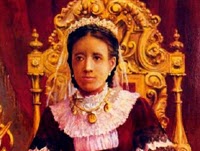
Queen Ranavalona III of Madagascar

I learned something new this week. Actually, I try to learn something new every day, but this one took me by surprise. I saw an entry in Wikipedia saying that on February 28, 1897 --  115 years ago today --  the last Ruler of Madagascar, Queen Ranavalona III was deposed and sent to live in exile in Algeria.


I have to admit, for me, this is the first time I have really thought much about the history of Madagascar at all. And probably the first time I thought of an African queen of that era.

So, I did a quick Google search, to see what I could come up with.  And, sadly, it wasn't very much. There are a couple of sites in French, which tested my retention of high school French from so many years ago. But I was able to find a few sites in English.
As sovereign of Madagascar, Ranavalona III became a pawn in the endgame of the maneuvering that had been taking place between the British and French since the beginning of the century. The tension between France and Madagascar had grown especially acute in the three years prior to Ranavalona's succession. French aggressions against Malagasy towns along the coast intensified in the final months of the reign of Ranavalona II and were ongoing at the time that Ranavalona III was crowned the new queen in the summer of 1883. Shortly afterward, Prime Minister Rainilaiarivony decided to engage Lieutenant Colonel Willoughby, a Briton who had gained combat experience in the Anglo-Zulu War (but without having been a member of the British armed forces), to oversee the nation's military affairs and train the Queen's army to defend the island against the seemingly inevitable French invasion.
(source: wikipedia)
Most sites say basically the same thing. I would love to know more about her, her life, what life in Madagascar was like, what would have happened if they had been left to rule themselves?
During her reign, Queen Ranavalona III tried to thwart both French and British designs to control Madagascar by turning to the nation’s strategic trading partner—the United States—for support. Despite the queen’s efforts, her fate was sealed when the French finally invaded and colonized Madagascar in 1896. They abolished the Merina monarchy and exiled Queen Ranavalona III to Algeria, where she died in 1917.
(source: fyeahblackhistory)
Throughout her reign, Ranavalona utilized diverse tactics such as strengthening trade and diplomatic relations with the United States and Great Britain in the hope of staving off impending colonization. However, French attacks on coastal port towns and an assault on the capital of city of Antananarivo ultimately led to the capture of the royal palace in 1896, thereby ending the sovereignty and political autonomy of the century-old kingdom.
(source: afrikanwomen)
Sadly, her efforts to get American help didn't work. I wonder why? Was it because the US is friends with France? Was Madagascar not important enough? Were we busy elsewhere?

I have lots of questions. Maybe I'll brush up my French vocabulary, and try to read some of the French websites.

If you like the work I do here at Self-Rescuing Princess Society,
please check out my Patreon.

Tuesday, February 7, 2012

SRPS History - Empress Matilda

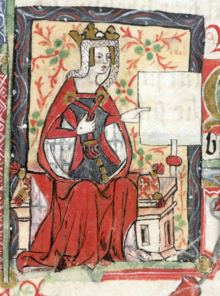
Speaking of English queens, 910 years ago today, Empress Matilda was born.
There are plenty of history sites telling of her life. What I've always been impressed with was her audacity to fight for her rule.
The inscription on Matilda's tomb at Rouen, France, read: "Here lies Henry's daughter, wife and mother; great by birth, greater by marriage, but greatest in motherhood." The tomb inscription does not tell the whole story, however. The Empress Matilda (or Empress Maud) is best known in history for the civil war sparked by her fight against her cousin, Stephen, to win the throne of England for herself and her descendants.
(source: about.com)
Her life starts out in the typical way for royal daughters: she has royal parents (in her case, her father was Henry I of England), who want to secure allegiances with other royals, and so marry their children (particularly their daughters) off to the best candidate to ensure peace and prosperity. Or just prosperity.

In her case, she was betrothed by the age of 7, married by the age of 12, and widowed by the age of 23. She and her husband, Henry V,  Holy Roman Emperor, had no children, so she was then married off again, only this time to a lowly count.

She was her father's sole surviving legitimate child. (Her brother, William Adelin died in November 1120, when he was 17 years old, when the White Ship sank. This is the story alluded to in Ken Follett's novel, The Pillars of the Earth.)

Before his death, her father proclaimed Matilda to be his heir, and had all his barons swear fealty. But after his death, her cousin Stephen of Blois rushed around England, building support to usurp her, rallying various forces, and quickly had himself crowned king. He even got the blessing of the Pope. Likely, those barons who swore their fealty did not relish the idea of a woman ruler, and were more than happy to go back on their promises. Especially once the pope absolved them of their oaths to the dead king.

Matilda rallied her own forces and fought Stephen for many years, taking back all of Normandy, and eventually returning to England to fight there. After another several years of war, and reclaiming several castles, defeats, retreats, victories and the standard chess game that was war in the 12th century, she found herself surrounded, and it looked grim.
In December 1142, Matilda was trapped in Oxford Castle, and besieged. She made a daring and renowned escape across ice and snow at night, and evaded Stephen’s army. A year later, she also had to escape from Devizes Castle, this time disguised as a body being taken for burial.
In 1147, she finally quit the warring and returned to Normandy. But she wasn't done fighting.  Her son, Henry II, now Duke of Normandy, was her new hope, and she instilled in him his claim to the throne.

In the interest of peace, Stephen finally brokered a treaty with Matilda, and agreed to name Henry II as his heir, thus ensuring the progression of her line, even if she never quite sat on the throne herself.

In addition to a brief appearance in Follett's book, there are several good works historical fiction about Matilda. I've heard good things about Lady of the English, by Elizabeth Chadwick. I'm intrigued, and since I absolutely adore historical fiction, I may have to check it out.


Have you read it? What did you think?