Kickass Women

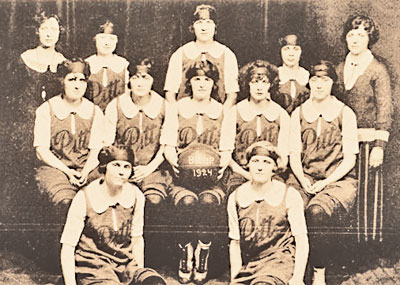
History is filled with women doing all kinds of kickass stuff.

Smart Girls

Watch these girls... they're going places!

Inspiration

Need a dose of inspiration? Here you go.

SRPS Entertainment

Some of my entertainment recommendations with awesome female characters and stars.

She's Crafty!

Some of the awesome items made by kickass women!

Friday, March 2, 2012

Women's History Month - Adelina "Nina" Otero-Warren

Nina Maria Adeline Isabel Emilia Otero was born in Las Lunas, New Mexico, in 1881, to conservative parents who proudly traced their heritage to 11th Century Spain. In fact, her Spanish ancestors had been active in New Mexico for almost 300 years before she was born.

By the time she was born and growing up in New Mexico, the Spanish had been routed, and the area was a growing US Territory. Railroads were bringing in Anglos to the region and commerce was growing.

As a daughter of two influential families, she was able to attend Maryville University in Saint Louis, Missouri from 1892 to 1894, to further her education.

When her uncle, Miguel Otero, was appointed territorial governor of New Mexico in 1894, she moved to Santa Fe.
There, she eventually married Lieutenant Rawson Warren in 1908. The marriage was short-lived, and Nina remained childless and independent for the rest of her years, though she helped raise her siblings after her mother's death. She focused on her professional life and politics, becoming one of New Mexico's most admired female leaders.
(source: Women of the West Museum)
By 1914, Otero-Warren was active in the Congressional Union, a group which worked for women’s suffrage. She was appointed, then elected, superintendent of the Santa Fe Public Schools in 1917. A Republican, she ran for the United States Congress in 1922, but lost to a Democrat John Morrow in the general election. She also served as chair of the State Board of Health during this period. She was appointed state director of the Civilian Conservation Corps by President Franklin D. Roosevelt. She was also noted for her book, Old Spain in Our Southwest (1936). She was named New Mexico State Director of Literacy Education in 1937, and Director of Adult Literacy in Puerto Rico in 1941. She died at her home in Santa Fe at the age of 83 and is interred in Rosario Cemetery.
(source: New Mexico Centennial)
If you like the work I do here at Self-Rescuing Princess Society,
please check out my Patreon.


You may also be interested in:

Happy Birthday - Emily Hahn
You know, as much as I'd like to think I know a lot about women in literature and history, I'm continually surprised by what I don't know. Especially when I learn about a woman in history who lived a truly amazing and adventurous life. For example, Emily "Mickey" Hahn.

SRPS Shout-Out - Sandra Day O'Conner
On July 7, 1981, President Ronald Reagan nominated Sandra Day O'Conner to replace Potter Stewart. I'm old enough to remember this piece of important history-in-the-making. It was a Big Deal™ at our house. The first woman to be appointed to the Supreme Court! She received unanimous approval by the U.S. Senate (99-0), and was sworn in on September 21, 1981.

Women's History Month - María Rebecca Latigo de Hernández
María Rebecca Latigo de Hernández was born in 1896 in Garza García, outside of Monterrey, Nuevo León, Mexicon. Her father was a professor. This leads me to believe that education was important to her family, and even though she was a girl, her parents still encouraged her to learn.


Women's History Month - Women of the Future - Jennifer Siebel Newsom

"You can't be what you can't see." 
- Marian Wright Edelman

Which is why Jennifer Siebel Newsom made MissRepresentation (which I blogged about recently). She is showing us what we CAN be -- a country that doesn't use the media to hold women and girls back, but instead celebrates each person's abilities and contributions.


In the documentary, she talks about growing up with the pressure to be perfect, mostly self-inflicted after the death of her sister. "I have to be two daughters." She excelled at everything -- sports, school -- and went on to a successful college career. In her attempt to be perfect, she developed a severe eating disorder, which she struggled to overcome.

She also discusses how, when she went to Hollywood to pursue an acting career, she was told she was already too old at 28, and too smart. Shocking, I know!

It wasn't until she became pregnant with her daughter (Montana, born September 18, 2009), that she really became active in the fight against media portrayals of women and girls, and was inspired to make MissRepresentation.


If you haven't seen the documentary, I urge you to try and find a showing in your area, or keep an eye on the OWN schedule for a rebroadcast. It is upsetting and disturbing, true, but it is also empowering.

In the meantime, you can watch her TED interviews. I'm thankful that she's the Second Lady of California. I hope that, in that role, she can bring more attention to the problem, and find more solutions.


Weekly Wrap-up

So much really good stuff this week!

First off, Oh No They Didn't has about a zillion stills from The Hunger Games. SQUEEEEE!


Two Nerdy History Girls, who always have great stuff, wrote about the blending of fiber arts and patriotism in a young girl's education: Painting & Stitching 'Caliope & Clio' as a Schoolgirl Accomplishment, c 1810

Continuing the fiber arts thread (see what I did there?), Symmetry Magazine has some great photos of some amazing quilts of the Large Hadron Collider. I just love geek arts and crafts! (h/t Feminist Philosophers)

elle, phd. has a cute video of her adorable godson giving a presentation about Marian Anderson, as well as a great link for more info about her life.

Jewish Women's Archive has a fun remembrance of the inimitable Sophie Tucker


Variety has a report that Sophia Coppola has selected Emma Watson for her film about teenaged burglars who hit celebrity homes. Color me intrigued!

SexyBeast host a roundtable with the women from Community, and it is awesome!

The folks at Gender Focus reminded us of this hilarious rap, A Lady Made That:


And, last, but certainly NOT least, there's a new Hunger Games clip:


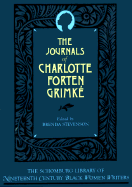
2012 Women's History Month Honoree - Charlotte Forten Grimké

"Let me not forget again that I came not here for friendly sympathy or for anything else but to work, and to work hard. Let me do that faithfully and well."

Charlotte Forten Grimké was born in Philadelphia, Pennsylvania, on August 17, 1837. Her parents were active abolitionists, and members of the influential Forten-Purvis families of Philadelphia -- an extensive family of abolitionists who ran an anti-slavery network to provide assistance to escaped slaves.

Charlotte was privately educated until 1854, when her mother died, and she was sent to Salem, Massachusetts, to attend the school and live with prominent abolitionists there. While she was at the Salem school, she also began her most famous work, Journal, in which she wrote about her life, her passions, her influences, and, most importantly, chronicled the abolitionist movement around the Civil War. She wrote of racial discrimination against slaves and freed blacks and segregation. Though discrimination troubled Charlotte, she used it as fuel to better herself. She wanted to prove that the black community was just as capable of being productive members of society as whites. She taught herself several languages, including German, Latin, and French. She became well-read in the classics and contemporary literature.
"Monday, October 23, 1854: I will spare no effort to prepare myself well for the responsible duties of a teacher, and to live for the good I can do my oppressed and suffering fellow creatures."
(source: PBS Online)

In 1856, she obtained her teaching certificate and became the first black woman to teach white students in Massachusetts when she became a teacher at Epes Grammar School. She was the first African-American in Massachusetts to teach white students.

It was at this same time in her life where she started to become more active in abolitionist causes, and joined the Salem Female Anti-Slavery Society -- a bi-racial organization founded in 1834 to work to end slavery.


During the Civil War, Charlotte asked her friend, the famous poet John Greenleaf Whittier, to write her a recommendation so that she could teach for the Port Royal Experiment, a school set up to educate former slaves. As the Union took over parts of the South, many plantation owners fled their lands but left their slaves. Eight thousand slaves were in need of education. Both she and the Union command felt this was a chance to prove how powerful education could be to former slaves. Charlotte was the first black teacher to join the Army's mission, and taught at a small school on St. Helena Island. While there, she wrote “Life on the Sea Islands,” an essay on her experiences.

In May of 1864, she returned to Philadelphia, where she continued to teach and write poetry. In the late 1860s, she worked for the U.S. Treasury Department in Washington, D.C., recruiting teachers, and in 1873 she became a clerk at the Treasury Department.
"May those whose holy task it is,
To guide impulsive youth,
Fail not to cherish in their souls
A reverence for truth;
For teachings which the lips impart
Must have their source within the heart . . ."
In 1878, she married Francis Grimké, a former slave, who attended school and eventually graduated from Princeton University, to become a Presbyterian minister. She continued her activism when they moved to Washington, D.C. where her husband took a position as pastor at the Fifteenth Street Presbyterian Church. While helping him with his ministry, she also organized a women's missionary group, and continued her "racial uplift" efforts.
Charlotte Forten Grimké's last literary effort was in response to an Evangelist editorial, "Relations of Blacks and Whites: Is There a Color Line in New England?" It asserted that blacks were not discriminated against in New England society. Forten Grimké stated that black Americans achieved success over extraordinary social odds, and they simply wanted fair and respectful treatment.

Charlotte Forten Grimké was a regular journal writer until she returned north after teaching in South Carolina. After her return, her entries were less frequent. While she did write about her daughter's death and her busy life with her husband, her writing was less frequent than the daily entries she made when younger. Her diary is one of the few extant documents detailing the life of a free black female in the antebellum North.
(source: wikipedia)


Thursday, March 1, 2012

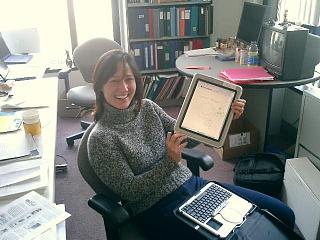
Women's History Month - Women of the Future - Cynthia Breazeal

It's important to know where we've come from, but it's also important to know where we are now, and where we're heading. 

Cynthia Breazeal is an Associate Professor of Media Arts and Sciences at the Massachusetts Institute of Technology where she founded and directs the Personal Robots Group at the Media Lab. She is a pioneer of social robotics and Human Robot Interaction. She has authored the book Designing Sociable Robots, has published over 100 peer-reviewed articles in journals and conferences on the topics of autonomous robotics, artificial intelligence, human robot interaction, and robot learning. She serves on several editorial boards in the areas of autonomous robots, affective computing, entertainment technology and multi-agent systems. She is also a member of the advisory board for the Science Channel and an Overseer at the Museum of Science, Boston.
(source: MIT Media Lab)
Breazeal was uniquely suited to the task of building this new robot. She grew up near the technology-rich area that would become Silicon Valley. Her father was a mathematician and her mother a computer scientist at Lawrence Livermore National Laboratory. Her parents raised her, she says, to be "protechnology." Breazeal became captivated by robots at age 8 when she saw Star Wars for the first time. "I just fell in love with the Droids," she says, especially R2-D2. "But I was old enough to realize those kinds of robots didn't exist." Growing up, she considered becoming a doctor and an astronaut. But she never gave up her interest in robots. When she studied astronomy, she was particularly intrigued by lunar rovers, which are really just a specialized form of robot. After graduating from the University of California at Santa Barbara, Breazeal went to M.I.T. in the early 1990s to become part of one of the world's most innovative robotics labs.
(source: Time)
"Ever since I was a little girl seeing "Star Wars" for the first time, I've been fascinated by this idea of personal robots. And as a little girl, I loved the idea of a robot that interacted with us much more like a helpful, trusted sidekick -- something that would delight us, enrich our lives and help us save a galaxy or two. I knew robots like that didn't really exist, but I knew I wanted to build them."
(source: TED)
You had me at Star Wars.

Breazeal is recognized as a designer and innovator on the national and global stage. She received the Gilbreth Lectures Award by the National Academy of Engineering in 2008. She has spoken at a number of prominent global events including the World Science Festival, the World Economic Forum, and TEDWomen. Breazeal is a featured scientist in the Women's Adventures in Science series (sponsored by the National Academy of Sciences). In 2003, Breazeal was recognized as a Finalist in the National Design Awards in Communication at the White House.
She is an Overseer at the Museum of Science in Boston, and she is on the Board of Advisors of the Science Channel.
She also has a prominent role as a virtual participant in a popular exhibit on robots with the traveling exhibit, Star Wars: Where Science Meets Imagination, interacting with a real C-3PO (voiced by Anthony Daniels as she spoke to the audience through a pre-recorded message displayed on a large plasma flat-screen display.
In 2003, she was named to the MIT Technology Review TR100 as one of the top 100 innovators in the world under the age of 35.
(source: wikipedia)


Women's History Month - Nannie Helen Burroughs

Nannie Helen Burroughs was born in Orange, Virginia, in 1878 to parents who had been born into slavery and freed. As a young woman, her widowed mother moved her to Washington, D.C., so her daughter could attended school. Nannie graduated with honors in 1896. That same year, she helped found the National Association of Colored Women, one of the most prominent organizations formed during the Black Women’s Movement. The group worked to promote the good works of black women.
Their original intention was "to furnish evidence of the moral, mental and material progress made by people of color through the efforts of our women". The NACW came about as a result of a letter written by James Jacks, the president of the Missouri Press Association, challenging the respectability of African American women, referring to them as thieves and prostitutes.
(source: wikipedia)
After graduating from high school, she had hoped to secure a position as a teacher in Washington, D.C., but without a college degree, she was denied every position she applied for. She then moved to Philadelphia to become associate editor of The Christian Banner, a Baptist newspaper.

Four years later, in 1900, she accepted a position in Louisville as secretary of the Foreign Mission Board of the National Baptist Convention -- the national association of black Baptist churches formed after the Civil War, when black churches withdrew from white-dominated churches.
Later that year at the annual meeting of the National Baptist Convention in Richmond, (she) argued for the right of women to participate equally in the missionary activities of the denomination in a speech entitled, "How the Sisters are Hindered from Helping." As a result of (her) speech, the Woman's Convention, Auxiliary to the National Baptist Convention was organized.
(source: Library of Congress)
Burroughs formed women’s industrial clubs throughout the South teaching night classes in typing, stenography, bookkeeping, millinery, and home economics to Black women.
(source: National Women's History Museum)

In 1907 she was granted an honorary M.A. from Eckstein Norton University, a historically black college in Cane Spring, Kentucky. Building on the support from the National Baptist Convention, she began planning the National Trade and Professional School for Women and Girls in Washington, D.C. -- to provide vocational training for African-American girls, who did not have many educational opportunities available to them.

The school opened in 1909 and she was its first president. She gave the school its motto "We specialize in the wholly impossible." She led her small faculty in training students through a curriculum that emphasized both vocational and professional skills, and directed courses on the high school and junior college level. Her students were to become self-sufficient wage earners and "expert homemakers."

She continued to work in the social and political spheres as well. As part of a network of strong black club women in the first half of the twentieth century, Burroughs was active in the National Association of Colored Women, the National Association of Wage Earners, and the Association for the Study of Negro Life and History. A well known speaker and writer, she was appointed by President Herbert Hoover to chair a special committee on housing for African Americans. She appeared with Carter G. Woodson and Alain Locke at a meeting of the Association in 1927, and her talk was reported in the Journal of Negro History: “By a forceful address Miss Nannie H. Burroughs emphasized the duty the Negro owes to himself to learn his own story." It was around this time she published and distributed a leaflet entitled 12 Things The Negro Must Do For Himself.
Unlike most of her contemporaries, Burroughs believed that industrial and classical education were compatible. She also became an early advocate of African American history, requiring each of her students to pass that course before graduation. Burroughs was a demanding principal. According to observers, she was such a purist that she was physically pained when she encountered grammatical errors made by her students.
(source: BlackPast.org)
Nannie Helen Burroughs never married. She devoted her life to the National Trade and Professional School for Women and Girls and remained its principal until her death in 1961. Three years later the institution was renamed the Nannie Burroughs School.

If you like the work I do here at Self-Rescuing Princess Society,
please check out my Patreon.


You may also be interested in:

Mary McLeod Bethune: suffrage and civil rights work
Mary McLeod Bethune's work with her school was remarkable in itself, and had she only focused on that, she would still be heralded for her contributions to society. But she did not. She could not. Her experiences trying to improve the lives of young African American women showed her that there was much work to be done -- both for their race and for their gender.
Happy Birthday - Septima Poinsette Clark
Septima Poinsette was born on May 3, 1898, in Charleston, South Carolina. Her father had been born a slave, and worked as a caterer after the Civil War. Her mother was born free in Charleston, but was taken to Haiti during the Civil War. After the war, she worked as a launderer, but did not work for whites, and refused to let her daughters work in white houses...
Eliza Ann Grier - the first black woman to receive a MD in Georgia
Very little is known about her early life. She was born during the Civil War. Her parents were slaves in Mecklenburg County, North Carolina, which made her a slave as well. After emancipation, her family moved to Atlanta, where she grew up and attended school. She originally intended to become a teacher, and attended Fisk University.

2012 Women's History Month Honoree - Emma Hart Willard

A great place to get started on the 2012 Women's History Month celebration is the National Women's History Project website. There, they have listed six honorees with special connections to this year's theme, "Women's Education -- Women's Empowerment."

First up is Emma Hart Willard, born on February 23, 1787, in Berlin, Connecticut, the sixteenth of seventeen children. Her father, Samuel Hart, was a farmer who encouraged his children to read and think for themselves, and at a young age, Willard’s father recognized and encouraged her passion for learning. Although, at the time women were only provided basic education, her father made sure to include her in family discussions such as politics, philosophy, and the sciences.

It wasn't until she was 15 that she was enrolled in her first school in her hometown. She surprised her teachers with her aptitude and quickness, and by the age of 17 she was teaching at the school. She even took charge of the academy for a term in 1806.

In 1807, she left Berlin and took a job of principal at the Middlebury Female Seminary until 1809. However, she was unimpressed by the limited curriculum of the school and, now married, left the school, and eventually opened a boarding school for women in 1814 in her home.

At the time, her nephew, John Willard, was studying at Middlebury College, and she and he discussed what he was being taught. This inspired her to improve the curriculum that was taught at girls’ schools, which were more like finishing schools, where women were not taught the typical male-subjects like mathematics and philosophy.

The Emma Willard Memorial, dedicated in 1941. Photo source: Don Shall
This passion for women's education led her to fight for the first women's school for higher education. She wrote A Plan for Improving Female Education, an influential proposal intended to bring attention to the importance of girls’ schools.  She advocated equal education for young women through the academy level.

In 1819, New York Governor DeWitt Clinton encouraged her to move to New York and open a school in Waterford.  Two years later, she moved to Troy, where she opened the Troy Female Seminary (renamed in her honor in 1895). Hers was the first school in the United States to offer higher education for women. The curriculum consisted of the subjects she had longed to include in women’s education: mathematics, philosophy, geography, history, and science. During her lifetime, thousands of young women attended the Troy school, and many of her graduates became teachers, writers, and social activists.

In addition to the profits from running her school (it was a for-profit enterprise), she also made her living from the many textbooks and a book of poetry.

I can't do the work of SRPS without your your support!
If you like what you read here, please share this post with your friends.

Women's History Month Kick-Off

Do we still need a Women's History Month?

When I was growing up in the 70s, my mother was increasingly active in the Women's Movement. She went to Consciousness Raising events, Guerrilla Comedy performances, and other activities. She made it a point to bring home her new-found knowledge and empowerment, making sure her two daughters were raised with pride and confidence in our female-ness. (I think she did a pretty good job.)


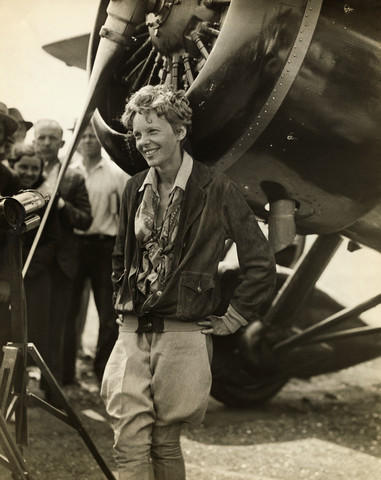
I remember going to the library and checking out all kinds of biographies, and I especially loved the stories about women in history. There were lots of biographies, but if I was looking for a story about women, I had to pretty much settle for Betsy Ross, Amelie Earhart, Marie Curie, Susan B. Anthony, and a handful of other women. And I had to search hard to find those few stories.

At home, I had the early issues of Ms. magazine to read, and that gave me other stories to read. And, I was that kid who would spend hours reading the encyclopedia. I read about everything, but occasionally would come across a new woman's story, and then spend time in the library trying to learn more.


I don't remember hearing about the beginning of history of Women's History Month, which actually started out as a week in 1978 in Sonoma County (represent!) designed to give more attention to the contributions of women to American history. But do I remember when women's groups were advocating the Congress to make it a national event in the late-80s, and how exciting it was when they finally did.

(I also remember all the backlash comments, "Why do we need a women's history month, but not a men's history, herp derp." I still see those comments, and I'm not going to debate them here.)


While this is a blog for self-rescuing princesses, and we celebrate our history year-round, I wanted to do something special for Women's History Month. So I've gathered lots of photos and stories and hope to publish a couple each day. (If there are any women you'd like to see featured, please leave a note in the comments.)

To be honest, it was not as easy as you'd think it would be. Or at least should be. My go-to websites are the wikipedia list of events, births, and deaths for each calendar day, and a couple of "this day in women's history" sites. While wikipedia is the easiest to navigate, it's rare that I find an event that is about a woman, other than some queen or princess being crowned or married. Even in the births, I usually have to look nearly halfway down the list before we get into the women of the 19th century. Most of the women listed earlier than about 1860 are, again, queens and princesses, and generally only famous for being married to a famous male regent. 


Even the women born in the 19th century and early 20th century are more likely to be famous for being actresses or musicians. Not that I have anything against entertainers, but it's not always the type of story I'm looking for.

And trying to find storied of women of color? Ai ai ai. That's a real challenge. I've been lucky that there are quite a few resources for Black History Month featuring black women. But in terms of finding stories of Asian American women  I've had to get friendly with a bunch of different Asian American focused blogs, hoping to come across the rare story about women.

I'm not complaining, really.


OK, maybe a little. It shouldn't be this difficult to find stories of women. For being 50% of the population, we still only make a tiny bit of historical accounts.

And that is why, 25 years later, we still need a Women's History Month. And why it's especially appropriate that this year's theme is "Women's Education -- Women's Empowerment."


Let's get started!