Kickass Women

History is filled with women doing all kinds of kickass stuff.

Smart Girls

Watch these girls... they're going places!

Inspiration

Need a dose of inspiration? Here you go.

SRPS Entertainment

Some of my entertainment recommendations with awesome female characters and stars.

She's Crafty!

Some of the awesome items made by kickass women!

Showing posts with label women in the arts. Show all posts

Thursday, January 25, 2018

Florence Mills - Queen of Happiness

Often referred to as the "Queen of Happiness," Florence Mills (January 25, 1896 – November 1, 1927) was an African-American singer, dancer, and comedian of the Jazz Age and Harlem Renaissance, who captivated the world with her talent, beauty and dedication to racial equality.


Born into a tragically poor family in Washington, DC, her talent for singing and dancing quickly won her recognition and offered her family an opportunity to escape grinding poverty. She started appearing in amateur hour events at the age of three, and by the time she was seven she'd grown accustomed to appearing before wealthy crowds as party entertainment, and had even traveled with a road show production with several other prominent black performers. By this point, she was a integral source of income for her family, so when she was offered the chance to travel as part of a traveling white vaudeville show, she took it, even though it meant she was expected to perform degrading racist stereotypical "shucking and jiving."

Florence Mills in Dover Street to Dixie
This entry into vaudeville enabled her to bring more of the family into show business. The Mills Sisters -- Florence, Maude and Olivia -- traveled the East Coast playing to black audiences. The pay wasn't great, and traveling as an African American was perpetually degrading as hotels and restaurants wouldn't serve African Americans, and they were often required to ride second class on trains between cities.

So when she found an opportunity to perform in a cabaret in the South Side of Chicago, she took it. The timing was perfect, as the African American community in Chicago was booming with recent arrivals from the South. It was a precursor to the coming Harlem Renaissance of the 1920s. Jazz was heard everywhere, and many jazz clubs were attracting both black and white patrons.

Florence's big break came a few years later, in 1921, when she was hired as the lead in the off-Broadway production of Shuffle Along, and instantaneous hit that Langston Hughes claimed kicked off the Harlem Renaissance. The show brought her national attention, and she was on her way. She performed in various prestigious Broadway cabarets and traveled to England to perform for welcoming audiences there.

But things at home weren't nearly as welcoming. When she was asked to join the Greenwich Village Follies -- the first time a black woman was offered a part in a major white production -- the all white cast threatened to walk out. Regardless, Florence continued performing and winning over audiences. She was even offered a contract to join the Ziegfeld Follies, but she turned it down, saying she didn't want to be the only black performer. Instead, she dreamed of creating an all black review of her own.

Johnny Hudgins, Florence Mills Rehearsing on Pavillon Theatre Roof, 1926

Johnny Hudgins, Florence Mills Rehearsing on Pavillon Theatre Roof, 1926

She continued to perform in wildly successful black musical productions, including From Dixie to Broadway, as well as headlining at prestigious Broadway venues. Finally, in 1926, her dream come true when Blackbirds opened at the Alhambra Theatre in Harlem. After a successful run in Harlem and Paris, Blackbirds opened in London where it lasted for 276 performances before taking off to tour the British provinces. It is said Florences Mills was as beloved in London as Josephine Baker was in Paris. It's even been suggested that while she was there she had an affair with the young and handsome Prince George.

Tragically, all this touring and performing took its toll on her health. She tried to rest, but her drive to show the world the talents of black performers kept pushing her to do more. Finally, in 1927, just a year after her London success, she left Blackbirds and sailed home to New York to get medical help. Sadly, because her mother was ill when she arrived, she put off her own treatment a little longer. In late October, when she finally entered the hospital she learned her condition was too far gone. Knowing she was going to die she still used her voice to cheer those around her, often singing to keep the nurses from crying. Her goal in life had always been to bring joy to those around her. True to form, her final words were "I don't want anyone to cry when I die. I just want to make people happy, always."

She saw herself as a spokesperson for the African American community. She used her fame to try to improve relations between whites and blacks both in the the US and abroad. She refused to degrade herself for the amusement of white audiences, and instead won them over with her incredible talent. Her signature song "I'm a Little Blackbird Looking for a Bluebird" was more than simply a sentimental song of a woman looking for love. It was also about the African American community's struggle for equality -- something Florence Mills spent her short, but incredibly vibrant, life working toward.

For more reading:

Notable Black American Women, "Florence Mills" by Richard Newman

Author Bill Egan has written extensively about the Jazz Era and in particular about Florence Mills

I can't do the work of SRPS without your your support!
If you like what you read here, please share this post with your friends.


You may also be interested in:

Harlem's Little Blackbird: The Story of Florence Mills
Harlem's Little Blackbird: The Story of Florence Mills earns the Self-Rescuing Princess Society seal of approval for telling the story of a brave woman who was determined to improve the lives of others. Her courage and certainty that she was on the right side of the issue is an inspiration to us all. It touches on issues around racism and shows how Florence fought against them at every turn in a way that even younger children can understand.
Josephine Baker - World War II Spy
Josephine Baker was so much more than simply a dancer. Later in her life she would become a prominent figure in the Civil Rights Movement, refusing to perform in front of segregated audiences in the US, and writing articles about discrimination. But before this period of public acts of resistance, though, she had an even more exciting but covert period -- she was a spy.
Happy birthday, Augusta Savage
While she was at Cooper Union, she applied for a program to study sculpture abroad in France, but was denied solely because of her race. Instead of taking it lightly, she raised a fuss, wrote letters to the media, bringing attention to the racists practices of the program. The program still refused to accept her, but her life was changed, and she became quite active in the civil rights fight.

Saturday, January 23, 2016

Kickstart This! In Between The Seams

Back in November, I shared a link on social media to story about an amazing all-female dance group out of Oakland, California, that is breaking down barriers and creating a place for women and girls in street dance beyond that of eye candy.
[F]or Oakland-based Jenay Anolin and Samara Atkins, both classically trained dancers who later fell in love with street dance, the options for women felt limiting. The pair met at a dance audition in 2008, and "in a lot of the groups that we were seeing, there was a heavy focus on the objectification of women," Anolin tells KQED Arts.


I've been following Mix'd Ingrdnts since then. I am in love with their mission to use dance as a way to inspire women to reach further, try harder, be more. And because they're based out of Oakland, it's almost natural that they'd also use their work to foster a stronger sense of community.
Mix’d Ingrdnts exists to empower women to express themselves and to hold platforms to help facilitate the community speaking up and out for the greater good. Mix’d also strives to empower youth through knowledge and dance in order to impact their lives so that they can impact others and their communities.


So it should be no surprise I was thrilled see their Kickstarter for their full length show In Between The Seams: Healing through Connection & Movement. It might be a stretch for someone who doesn't live in the area to consider backing this project, but I want to strongly encourage you to keep in mind how important it is to women all around the world to see the success of projects like this. We live in a highly connected world. It is this very sense of connection that Mix'd Ingrdnts wants to highlight in their show.
Connection is real. Whether it's seen our unseen. Connection is that invisible thread that we have with one another.
I couldn't agree more.

If you like the work I do here on SRPS, please support me!

Monday, November 2, 2015

Raven Wilkinson - trailblazer and mentor

Today is the 80th birthday of pioneering African American ballet dancer Raven Wilkinson.

You've probably heard of Misty Copeland and her recent promotion to principal dancer with the American Ballet Theatre -- the first African American woman to hold that title. You may even have heard of Michaela DePrince, the young woman born in Sierra Leone and now breaking down barriers in the American ballet.

Long before they graced the stage, though, there was Raven Wilkinson.


Raven Wilkinson grew up in Harlem, in a house directly across the street from the Dance Theatre of Harlem. That is where she first fell in love with dance. Her mother, who had studied ballet herself, encouraged her young daughter's burgeoning passion. Raven's talent was evident from an early age. She started lessons at the age of five, and on her ninth birthday her uncle's generous gift was for lessons at the esteemed Ballet Russe School, led by Bolshoi dancers Maria and Vecheslav Swoboda.

In 1955, at the tender age of 20, she signed a contract to dance full time with the Ballet Russe de Monte Carlo, and in doing so became the first African American dancer for a major classical ballet company.

As you might imagine, life as an African American dancer in the 1950s was not easy.

Tuesday, September 29, 2015

She's a Genius - The Women of the 2015 MacArthur Foundation Fellows Program

The Class of 2015 MacArthur Fellows has been announced and, again, it's an exclusive club of brilliant minds -- scientists, artists, and thinkers -- who are challenging what we already know and leading us in new directions. This program is nicknamed the "Genius Grant" for good reason: each recipient is being honored for their ability to think in a completely new way, applying their particular brand of "genius" to whatever passion they pursue.
"Talent hits a target no one else can hit; Genius hits a target no one else can see." Arthur Schopenhauer
This year nine remarkable women are being recognized for their efforts to share new discoveries, show us new ways of interacting, and bring us closer to the truth about what it is to be human.

Sunday, August 25, 2013

Happy Birthday - Lavinia Fontana

Lavinia Fontana was born August 24, 1552, in Bologna, Italy.

Lavinia Fontana, 1552-1614, Bolognese Painter
by Felice Antonio Casone ca. 1611 (source: Wikipedia)


Lavinia Fontana was one of the most successful painters in her time, and the highest rated female painter in Bologna. Unlike the few other women artists at the time, she had a prolifically successful career painting a wide range of subjects for her patrons and clients -- including portraits, alterpieces and historical and mythological paintings.

While it wasn't totally uncommon for noblewomen to explore artistic pursuits, the level of training and support, as well as the number and types of commissions she received during her career, are remarkable. It was a lucky accident that she was born into the family and time she was. Her father, Prospero Fontana, was himself an accomplished and well respected artist of his time. He taught his daughter and treated her as an apprentice in the family business of painting, which was customary at the time.

Self-portrait at the Clavichord with a Servant ca. 1577 (source: Wikipedia)


In addition to having a master as a father and mentor, she was born during an exciting time for art in Bologna. The city was considered one of the greatest cities for painters at the time. She was surrounded by great artists and art, and there is no doubt that the social and religious culture of Bologna had a profound effect on her as an artist.
Being born the daughter of the successful artist Prospero Fontana (1512-1597), a provincial painter with a solid reputation, had numerous advantages. During Lavinia's apprenticeship, Prospero shared with his daughter the artistic skills he had mastered during his early training in Genoa. The time Prospero had spent working in Florence and Rome, prior to returning to Bologna, undoubtedly contributed to the overall quality of Lavinia's early studies. Lavinia's apprenticeship in her father's studio provided her with ample opportunities to contribute to her father's commissioned works as well as to produce works of her own design. The first recorded works attributed to the hand of Lavinia date from 1575. Lavinia also profited from being born in the Italian city--state of Bologna, which was a prominent Italian artistic center during her lifetime. In Bologna, Lavinia could study distinguished works of art at her convenience.
(source: Extraordinary Women of the Medieval and Renaissance World: A Biographical Dictionary, by Carole Levin; Debra Barrett-Graves et al.)
Under her father's tutelage she developed her natural talent and became a prosperous portrait painter. At the time, most women painters worked solely selling their skills painting portraits of wealthy families, and particularly women nobility. Her attention to detail and her genuine talent brought her widespread fame, reaching beyond Italy.

Portrait of a Noblewoman ca. 1580 (source: NMWA)


When she was twenty-five, she married another young student of her father, Paolo Zappi. She and Paolo had 11 children, only three of whom survived her. Although Paolo was also a painter, it appears that his role in the marriage was more one of support for his wife's artistic career. He acted as her assistant, which included painting minor elements of her works.

Her commercial painting included more than just portraits. She also painted devotional images and alterpieces.
Fontana was also the first woman to paint alterpieces at the time of Counter-Reformation and the growing power of the Catholic Church. One of her altarpiece paintings, San Francisco di Paola blessing the Child has been also on view in the Pinacoteca Nazionale. Birth of the Virgin Mary can be seen in Santissima Trinita church and Madonna Enthroned with Child and Santa Caterina of Alexandria, Cosma, Damiano e il Committente Scipione Calcina in the church of San Giacomo Maggiore, among other churches of Bologna.
(source: Women In The Arts)
Judith with the Head of Holofernes ca. 1570 (source: It's About Time)


Her fame attracted the attention of high ranking members of the Catholic Church, and she was increasingly commissioned for portraits and works with a religious theme.
National Gallery of Art Fontana and her family moved to Rome in 1603 at the invitation of Pope Clement VIII. She gained the patronage of the Buoncompagni, of which Pope Gregory XIII was a member. Lavinia thrived in Rome as she had in Bologna and Pope Paul V himself was among her sitters. She was the recipient of numerous honors, including a bronze portrait medallion cast in 1611 by sculptor and architect Felice Antonio Casoni.
(source: Wikipedia)
There are quite a few great resources online and in print if you're interested in learning more about the life and works of Lavinia Fontana:

Wednesday, August 21, 2013

Duchess Sophie-Elisabeth of Mecklenburg

Four hundred years ago, Duchess Sophie-Elisabeth of Mecklenburg was born into a life of immense wealth and privilege. But even as a noble woman her options for a fulfilling life were limited. With the support of her family she was able to build on her innate musical talents and produce many projects which have been remarkably well preserved as an example of early baroque compositions.

She was born on August 20th in 1613, into a wealthy family with a long history of supporting the arts. While it was not unusual for girls of her status to be given a basic education in language and culture, her experience was more than simply learning how to appreciate fine art and music. She was afforded the remarkable luxury of being able to study with many distinguished musicians, and eventually given the opportunity to become an important figure in the German baroque movement.
"At Güstrow, Sophie-Elisabeth's father maintained a thriving musical establishment, with a sizable contingent of English virtuoso performers in its orchestra. Sophie-Elisabeth and her sister Christine Margarete thus had rich opportunities to study the lute and gamba."
Her mother, a remarkable musical talent herself, died while Sophie-Elisabeth was still quite young. Her father soon remarried, and his second wife, Elisabeth, was an extraordinarily gifted musician and singer as well. In addition, she was fluent in several languages, as well as educated in theology.
"Following her personal convictions, Elisabeth of Hesse-Kassel involved herself directly for nine years in the education, including religious and musical tutoring, of the young Sophie-Elisabeth and her sister. Elisabeth's upbringing amid the intense musical activities and her father's court prepared her to be duchess at Güstrow, expanding its instrumental forces and actively encouraging festive court representations. Thus as a teacher and active musical administrator, she acted as an influential role model for her young charges at Güstrow. With adulthood, Sophie-Elisabeth would follow Elisabeth's example as an important musical impresario."
Tragically, when Sophie-Elisabeth was 13, Elisabeth, only 29 herself, died, leaving her father widowed and his children motherless for a second time. Proving the importance placed on music and arts training in the Güstrow estate, his third wife, Eleonore Marie, was also a well-educated woman, with a strong background in religion, languages, and especially music. She took over the continued education of Sophie-Elisabeth and Christine Margarete.

Only two years later in 1628, the whole family was forced to flee their home and homeland of Mecklenburg as exiles as the political and religious turmoil of the Thirty Years' War spread to the region. Sophie-Elisabeth and her sister spent the years at the Kassel court with the father of their former step-mother Elisabeth. While this experience must have been stressful for two young women in their formative teenage years, it was also likely a highly influential experience on Sophie-Elisabeth's musical experience, as the Kassel court had a "long and distinguished musical history." Her step-grandfather himself was an educated musician as well as a patron of the arts, and regularly hosted musical events as well as fostered a general atmosphere of refined culture.

After the family estate was liberated, Sophie-Elisabeth and her family returned to Mecklenburg, and slowly resumed their lives of luxury and study. In 1635, at the age of 22, Sophie-Elisabeth married Duke August the Younger of BraunschweigLüneburg, himself a highly educated man and patron of the arts.

The Thirty Years' War continued to rage in her homeland, Sophie-Elisabeth and her husband Duke August and his children were somewhat protected, and continued to participate in an active cultural life.
"Sophie-Elisabeth's humanist background fit in perfectly with the Wolfenbüttel court, a sophisticated center of German intellectuals and literati. She participated in several of Wolfenbüttel's exclusive literary-arts societies that she had joined early in her marriage: the Académie des Loyales, the Tugendliche Gesellschaft, and the Fruchtbringende Gesellschaft, in which she was given the pseudonyms die Fortbringende, die Gutfillige, and die Befreiende, respectively. Dedicated to the cultivation of works in the German language, Wolfenbüttel's Fruchtbringende Gesellschaft, however, offered full membership only to men. But with her status as Duke August's wife, Sophie-Elisabeth was thus admitted as an honorary member, one of the earliest women accepted into this society. Her participation in these organizations contributed significantly toward maintaining the Wolfenbüttel court as a major center of contemporary German and French literature."
Her marriage to the Duke gave her a rich cultural experience, and contributed to the expanding of the arts throughout Europe, despite the continued ravages of the war. While acting as a mother to the Duke's four children, as well as raising her own two children, she also managed much of the cultural events at court. By 1645 her husband was so busy with political duties he officially made her the administrator of the musical events of his court. She was tasked with the management of the musicians and structuring of the musical establishment. This duty sometimes even meant reprimanding her husband for failure to pay his court musicians.

It was during this time that she collaborated with Heinrich Schütz, an established composer affiliated with the nearby Dresden court. He acted as her mentor in the reorganization of the musical events at her husband's court, as well as helping her with her own musical compositions. With his assistance she was able to restructure the musical life at court after the chaos of the war.
"Sophie-Elisabeth -- because she was a woman -- never had been able to undertake the rigorous formal course of study, particularly in counterpoint, traditionally required of 'professional' male students for composing unaccompanied choral works." Schütz offered her suggestions for improvement and encouragement in her talents. In 1661, he wrote to her husband, praising her "as the incomparably perfect princess in all other princely virtues, especially in the praiseworthy profession of music."
"The earliest surviving collections of Sophie-Elisabeth's musical works and arrangements appear in three sizable manuscript collections now in Wolfenbüttel's Herzon-August-Bibliothek, the distinguished library founded by her husband."
Each of the three manuscript collection contains works of a similar type and period in her development, and document her improvement over time. Additionally, there are two songbook collections of works Sophie-Elisabeth created with her husband.

In her role as administrator of the musical events at court, she was involved in creating and producing twenty-five Festspiele -- "song-ballets, each one consisting of a series of dances with much vocal music embellishing the drama itself."  Not only did she organize these events, she also composed or arranged much of the music for them.
"Although twice left motherless in her childhood and subjected to the horrors and indignities of a terrible was, Sophie-Elisabeth transcended the typically circumscribed orbit of a female royal spouse in her day with its rather fixed cultural and gender roles. To the contrary, this musically gifted, persevering, compassionate, and politically astute duchess contributed significantly to the cultural history of the German early baroque period."
"Among the relatively few seventeenth-century German noblewomen composers of her day, Sophie-Elisabeth was also the first German woman composer to attain performances and publication of her works while she was living. That was no small feat."
While she may not have been up to the standards of many of her contemporary male composers, it is clear that she was quite talented and that this talent had been supported by her father and her husband, which in itself is quite remarkable. Her strength as a woman who had to overcome the hardships of life and war is evident in her quite capable handling of court affairs as duchess. That so many of her works have been preserved shows that she was a valued member of the court. She clearly deserves to be remembered as a talented and capable musician in her own right.

text source: Five Lives in Music: Women Performers, Composers, and Impresarios from the Baroque to the Present by Cecelia Hopkins Porter)

photo source: RoyaltyGuide.nl

Wednesday, August 14, 2013

She's Crafty!


Erin M. Riley's pop culture tapestries are intricate and moving. She deftly captures intimate snapshots of time in a woman's life. Many of them are NSFW, and some are quite disturbing, but they are all beautiful.


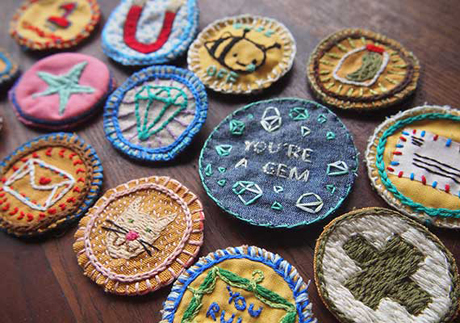
This gorgeous embroidery is just too amazing for words. Which is good, because my high school French is très rusty.


I'm spending far too much time thinking of awesome badges to make for all my friends. Because, seriously, this is cool!


I'm just amazed by this magnificent Mario Maps cross stitch piece. While I appreciate all forms of fiber arts, I have a special love for cross stitch. It appeals to my need for organization and precision. In my time, I've completed several large-format cross stitch projects. I know the amount of work that goes into them.


I mean, the details are just wonderful! I know pixel art lends itself quite easily to cross stitch, but this is so much better.


You know, perler beads kinda get a bad rap. I get the impression that some people think they're kitschy and mainly for little kids. But once in a while I see something that stops me in my tracks. And it's this ridiculously detailed Legend of Zelda Triforce Montage by NestalgicBits. In fact, his whole store is filled with amazing game-related items that bring a whole new level of amazing to crafting with perler beads.

Friday, April 12, 2013

KickStart This!

I first saw Angela Patton's TED talk about a month ago, and since then I've been growing more and more amazed by this woman and her work helping girls stay connected with their fathers who are serving time in prison. Locked In NOT Locked Out (A Father-Daughter Dance in Prison) is her documentary about the project.

For one year, starting with this year’s “Date with Dad” and “Dance of Their Own,” we plan to follow four fathers: two incarcerated, who will attend the special father-daughter dance inside the Richmond City Jail; a married father who has made the “Date with Dad” an annual tradition with his daughter; and a weekend dad who is attending the “Date with Dad” for the first time. We plan to delve deep into the stories of these girls, and young women, and their relationships with their fathers. What we will reveal is the common thread that ties them all together: that all of these relationships matter, that fathers matter, and that these relationships make a difference. These familial ties are especially significant in the lives of the men who are incarcerated.


When you think of the women of jazz, I'll wager you typically think of the greats like Ella Fitzgerald or Billie Holliday, and with good reason. They were the shining stars of the era. But there were so many other women playing jazz that we rarely learn about. Producer Kay D. Ray, who has worked with Microsoft and the Experience Music Project to create over 90 films about music is trying to raise funds to edit her two hour movie, and needs our help to get Lady Be Good finished and ready to debut!
LADY BE GOOD gracefully interweaves rare archival footage, photos and filmed interviews into a full understanding of this important chapter in American musical history. Interviews with musicians, band leaders and historians include Clora Bryant, Barbara Carroll, Joy Cayler, Quincy Jones, Melba Liston, Marian McPartland, Bruce Raeburn, Carline Ray, Jane Sager, Artie Shaw, Dr. Sherrie Tucker and Gerald Wilson, just to name a few. The film is narrated by the talented musician, Patrice Rushen.

Taymika Byrd is a New Orleans native, writer, Girl Scout, Ph.D. candidate, and all-around awesome young woman! She is also a sexual abuse survivor. What started out as a writing project to help her deal with her abuse turned into her latest book The Crescent City Connection Project.
In 2012, as part of my recovery process, I decided to write a fictionalization of my experiences. It was an exercise designed to defeat my own personal demons and it was supposed to be a short story relegated to the pages of my personal journal. However, six months later it had evolved into a full length book. At that point, I decided that not only should I use this work to support my own recovery, but maybe by publishing it, this book might also support the recovery of others.


I loved the game Old Maid when I was a kid. Well, here's an exciting, fresh new take on the game, renamed Bold Maid,! I've already ordered my set of cards and can't wait to play this at Game Night!
To refresh your memory, Old Maid is a matching card game. There is no match for the Old Maid, so the player who ends up with her, loses the game. I've politically corrected this game to chip away at the negative connotations concerning single women. So in my version, the one who ends up with the BOLD MAID is the WINNER.

And while we're on the subject of the role of women in games, when Shannon Sun-Higginson learned about the harassment of women and girl gamers, she decided to create a film showcasing some of the amazing women in games and how they have changed the world of gaming forever: GTFO: A Film About Women in Gaming.
The purpose of this documentary is to reveal the experiences of women in the gaming world, both good and bad, as well as to provide steps we can take to change the environment for the better. I have already filmed interviews, tournaments, classes, and conventions, but I need your help funding the remainder of the project.

I am in love with the work of Emily Selwood! She's raising funds to get some of her pieces printed as notecards and posters so she can reach a wider audience.


There are so many amazing Kickstarter projects by and about women. Let's get them funded!

Tuesday, January 22, 2013

Happy Birthday Helen Hoyt


"At present most of what we know, or think we know, of women has been found out by men, we have yet to hear what woman will tell of herself, and where can she tell more intimately than in poetry?"

Saturday, January 19, 2013

Happy Birthday Magda Tagliaferro


Having begun her concert career in 1908 at the age of fifteen with the aforementioned recital at the Salle Érard in Paris, not long afterwards Tagliaferro was selected by Fauré to tour with him, performing his works.
In the years preceding World War II Tagliaferro taught at the Paris Conservatoire, but at the outbreak of the war was sent by the French government to New York on a mission of propaganda to promote French music abroad. She gave her debut at Carnegie Hall and continued on to Brazil, remaining there for nine years and founding schools in Rio de Janeiro and São Paulo.
Tagliaferro loved to perform and teach, and at the age of eighty-six, she returned to New York and gave a recital that included Schumann’s Carnaval Op. 9. New York Times critic Harold Schonberg wrote, ‘Not since the days of Rachmaninov and Friedman has this listener encountered such a basic understanding of, and feeling for, the composer’s mercurial moods. Everything made musical sense. But more to the point was the colour that Miss Tagliaferro employed: the weighting of chords, the introduction of inner voices when the sections were repeated, the solid bass underpinning in which key harmonies were reinforced… In its improvisatory quality, its infallible rhythm and perfect pacings, it was the essence of Schumann.’ At the age of ninety Tagliaferro was giving concerts in London, Paris and New York, and even in the year of her death when she was ninety-three she was still performing. 
One of the most colourful personalities and pianists of the twentieth century, Tagliaferro wrote in her memoirs, ‘I’m going to offer myself up entire and with humility. My life has all been Love, in the widest sense of the word. Everything I have created within or around me has been created with Love. Which is better? To love or to be loved? Never one to be satisfied, I have always needed both!’

(biography source: Naxos.com)

Saturday, January 5, 2013

KickStart This!

I recently headed over to KickStarter to check out the status of the projects I'd backed in November and December, the Girls Helping Girls project caught my eye. Rachel Vaughn, a graduate student in International Education is looking for help to tell the story of some remarkable school girls in Washington, DC, who raised money to send underprivileged girls in India to the Shreyas Foundation school.
I hope this video will help to share the amazing work that Shreyas Foundation is promoting, and to highlight the challenges of girls' education in India. I'm volunteering my time and buying my own plane ticket. But for this project to be a success, I need your help! 
What a wonderful story!


If you know me, you know that I love ensemble cast productions. Besides being a great way to tell a story about community, it's a fantastic way to address broader issues. And it gives more wonderful actors a chance to perform their art.
13 Women the play deals with issues that women tend not to talk about. The characters in 13 Women are named after some of these issues like: low self esteem, adoption, sexual abuse, domestic abuse, parent rejection, homosexuality, abortion, suicide, fatherless child, single mother, reverse discrimination, drunk driving victim, and divorce.


I also love stories that delve into the messy business of human foibles. Ice Cream Walla is the story of an Indian girl whose father has committed suicide. While trying to cope with her anger and pain, she meets his secret lover, who is also heart-broken and angry. Together, they have to learn how to forgive each other, and the man they both loved.

For me, 'Ice Cream Walla' explores the complexity of family secrets and love, of how we live in duality torn between our truth and what's expected of us and unable to live freely of our own will. It explores how it feels to be a child in a family and how a family makes choices the child has to live with. This is my way of dissecting and taking apart and trying to make sense...at least in this one story, how we can find a better place to be despite having all the odds against us. How we can rebuild, creating our own families. It's also really a look at the beauty and ridiculousness of humans in one small story.
When Jennah Dirksen and her friends were in film school, they taught themselves how to stage-fight (how awesome is that?), and came up with a great story idea about a young assassin who returns to her former teacher with the intention of killing him to stop him from murdering others. Little does she know that they are both being hunted. After graduation, the script for Katanas, Death and Mayhem sat idle until recently when Jennah received her black belt in weaponry. Armed with her new skills, she and her former classmates are ready to start filming.


Friday, November 2, 2012

KickStart this!

Cary Cooper's new album Zuzu's Petals. The video is told from the point of view of her daughter, but features some of her lovely music. And I love the idea of her stretching herself outside her comfort zone.
Learning and becoming competent on an instrument, and learning how to carry whole shows by myself were among the things that terrified me the most. But because I love doing what I do and can’t imagine doing anything else, I made the brave commitment to stretch and see just how far stretching would take me. As it turns out, I’ve stretched pretty far!

Heroine is a role playing game with an adventurous young woman protagonist, by Josh Jordan. I've heard so many great things about this project from my various gamer friends. We don't do a lot of story-telling around here, but I might have to get a copy anyway.
Heroine is a storytelling game inspired by books and movies like Wizard of Oz, Labyrinth, Alice in Wonderland, and The Chronicles of Narnia. I love these stories about a girl who has serious problems to deal with in her regular life, but who gets whisked away to the Other World, where she has an unusual chance to be heroic.

Invisible Warriors: African American Women in World War II -- will tell the stories of African American working during World War II -- fighting the war and fighting for their own civil rights. This looks like a great project and well worth funding for the historical value alone!


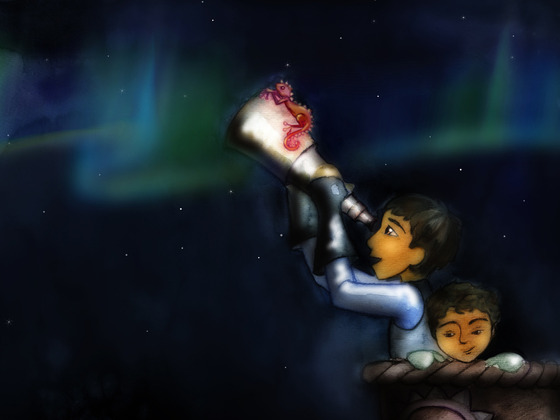
Keeper of the Stars, by Aubrey Jewel - "A tale of the magic found in the night sky in the form of an animated story." This looks like a lovely book for kids, young and old alike.


Fabulous artist Therese Obergottsberger is looking for some help getting her her work scanned and ready for a showing in New York in December. She's an amazing talent!


Diary of a Champion -- Looks like the kind of sports story I'd love to see. And the cast list is impressive.
When your passion and talent don't seem to be enough, the lengths one will go are detrimental. Following the story of Track & Field star Tahja Dupree, “Diary of a Champion” explores the politics and scandal behind the doors of competition between prominent track athletes and coaches preparing for the 2016 games.


And finally, just in time for the holi-daze, check out Heather "Cloe" Bloss' Spoonful of Cats Holiday Cards. I mean, who doesn't like cute cats in holiday scenes?


What KickStarter projects are you following?

Thursday, November 1, 2012

LunaFest 2012

Ai! It's been a month and a half since I posted last! Gotta catch you all up on what this self-rescuing princess has been up to!

The goodie bag! Filled with lots of great stuff!

A dear friend very generously gave me her extra ticket to LunaFest 2012, and I had a blast (and spent way too much money)! It was wonderful to see so many local businesses out supporting such a wonderful event -- great movies by, for, and about women -- and helping local women!

I really wanted to win this sculpture. Sadly, I didn't.

I wish I could link all the films here for you to watch. They're all so important, so inspirational, so funny and moving. If you see them coming to your area, make it a point to go see them. They really are that good. These, though, were the four that really captured my heart:

Blank Canvas, by Sarah Berkovich
When Kim received a devastating diagnosis for uterine cancer, her world turned upside down. Through her treatment, she has struggled to cope with her changing body image in positive ways. Taking an unconventional route, Kim decides to turn her baldness into a blank canvass for self-expression, and in doing so creates a powerful statement that allows her to share her experience with others.
This one was really amazing. And empowering. I only hope that if I'm ever faced with something as traumatic and terrifying as Kim, I would have the same amount of grace and the same "f*** you" attitude.

Lunch Date, by Sasha Collington
2011 was supposed to be Annabel’s year. So why is she here, sitting in a restaurant, being told by a fourteen-year-old that her boyfriend, Thomas, doesn’t want to see her anymore. The small messenger is Wilbur. He has agreed to break the news as payment for borrowing Thomas’s tent. But dispensing with Annabel proves a bigger challenge than Wilbur had anticipated.
This film was funny and cute. It turns everything on its head, in a really charming way.

Flawed, by Andrea Dorfman
Artist Dorfman's drawings burst colorfully into life as she animates the story of her long-distance relationship with a man whose profession—plastic surgery—gives her plenty of fodder for thought about what makes a person beautiful. Flawed is less about whether girl can get along with boy than whether girl can accept herself, imperfections and all. Animated in timelapse, as an homage to the time-honoured tradition of storyboarding, the plot ofFlawed, unfolds like a storybook, one watercolour painting at a time.
This one was a bit heavy, tackling the tough subject of childhood plastic surgery. But the heaviness is offset by the animation style. It's sweet and thoughtful and really more what relationships really are about -- learning how to love ourselves in the context of the relationship.

Whakatiki - A Spirit Rising, by Louise Leitch
Kiri, an overweight Maori woman, takes a trip to the Whakatiki River where she spent many summers as a girl. With her goes her husband Dan, his friend Seb and beautiful newcomer, Josie. The place awakens powerful memories for Kiri, and as tensions mount she draws on her spiritual connection to the river to rise up and reconnect with her true self.
This got rousing applause. It was painful to watch, but the way it turned out was such a relief. And, frankly, this is the film that has stayed with me the longest.