Kickass Women

History is filled with women doing all kinds of kickass stuff.

Smart Girls

Watch these girls... they're going places!

Inspiration

Need a dose of inspiration? Here you go.

SRPS Entertainment

Some of my entertainment recommendations with awesome female characters and stars.

She's Crafty!

Some of the awesome items made by kickass women!

Showing posts with label older women. Show all posts

Tuesday, February 9, 2016

Peggy Whitson - astronaut

"Raised on an Iowa farm, but grew up to be a commander of a spaceship." If you're a sci-fi nerd like me, this story sounds very familiar. But in this case, I don't mean Captain James T. Kirk.

I'm talking about Peggy Whitson, biochemistry researcher, NASA astronaut, and former NASA Chief Astronaut. She was the first woman to command the International Space Station when she arrived as part of Expedition 16, on October 10, 2007. After her two trips to space, she's NASA's most experienced female astronaut, with more than 376 days in space. And she's going back again in November 2016 as part of Expedition 50/51. At 56, she will be the oldest woman to travel in space.

Peggy was born on February 9, 1960, in Mount Ayr, Iowa, and grew up on a farm nearby. She learned all about determination and hard work watching her parents as they got up before dawn every day to keep the farm running. When she was nine her class watched the live footage of Neil Armstrong taking his first steps on the moon. She was moonstruck. Or, at the very least, space-struck. In 1969, it seemed unlikely that a little girl could become an astronaut, but by the time she graduated from high school things had changed. The same year she received her diploma and looked out at her options was the same year NASA began accepting women. "[A]t that point I thought: this is going to be something I'm going to try and do."

Tuesday, October 15, 2013

Music Break - Victoria Spivey

Today's special birthday shout-out goes to the amazing Victoria Spivey, born on October 15, 1906. This lady was seriously kickass, all the way through her long and productive life.


Victoria Spivey was born into a family chock full of musical talent. Her father, employed as a railroad flagman, was also a part-time musician. Her mother was a nurse (I promise a longer post some day about African American women nurses around the turn of the last century -- it's a fascinating story!). And all three of her sisters were musicians.

Together, they formed a family string band, and performed around Houston, Texas. Sadly, her father died when she was only 7 years old, leaving her to find her way in the music business without him. As it turns out, she did quite well. Even as a child, she continued to perform at local parties, and at the age of 12 was hired to accompany films at the Lincoln Theater in Dallas.

All through her teen years, she worked in local bars, nightclubs, and buffet flats, learning and growing musically. She usually performed solo, but occasionally with other, more experienced singers and guitarists.

At the age of 19, she moved to St. Louis. It was there where she began her recording career. Her first song, "Black Snake Blues" was a success, followed by other songs that were equally well received. Because of her experience working in some of the shadier parts of town and hanging out with prostitutes and drug addicts, many of these characters and themes found their way into her music.
In the early '20s, she played in gambling parlors, gay hangouts, and brothels in Galveston and Houston with Blind Lemon Jefferson. Among Spivey's many influences was Ida Cox, herself a sassy blues woman, and taking her cue from Cox, Spivey wrote and recorded tunes like "TB Blues," "Dope Head Blues," and "Organ Grinder Blues." Spivey's other influences included Bobby "Blue" Bland, Sara Martin, and Bessie Smith. Like so many other women blues singers who had their heyday in the '20s and '30s, Spivey wasn't afraid to sing sexually suggestive lyrics, and this turned out to be a blessing nearly 40 years later given the sexual revolution of the '60s and early '70s.
(source: AllMusic.com)
By 1929, she was well known in the blues community, and was given the role of Missy Rose in the all black musical film Hallelujah directed by King Vidor. Even during the Great Depression, she was busy performing, touring and recording with many famous musicians of the era, including Louis Armstrong, as well as appearing in other films and musical reviews.

For a brief period in the 1950s, she was considered semi-retired. Even then her incredible musical talent was still a big part of her life, and she spent these years as choir director and pipe organist in her church. But when the folk music revival started in the early 1960s, she felt called back to secular music. This time, she was not only performing, but leading the charge to find and support new musicians as well as bring attention to other, lesser-known musicians from the past.
After taking a semi-retirement in the 1950s, Spivey returned to performing in the United States and internationally in Europe and in 1962 began her own record company, Spivey Records. She used this company as a vehicle to resurrect older blues artists as well as introduce new artists, including Luther Johnson, Lucille Span, Olive Brown, and the first recording of folk artist Bob Dylan. She also recorded some of her own music during this period and occasionally performed on television. By the time of her death in 1976 she had attained copyrights on the lyrics of at least seventy-five songs.
(source: Emory University)
Her immense talent and staying-power is truly remarkable.
Victoria Spivey was one of the more influential blues women simply because she was around long enough to influence legions of younger women and men who rediscovered blues music during the mid-'60s U.S. blues revival, which had been brought about by British blues bands as well as their American counterparts, like Paul Butterfield and Elvin Bishop. Spivey could do it all: she wrote songs, sang them well, and accompanied herself on piano and organ, and occasionally ukulele.
(source: AllMusic.com)
This is certainly one kickass blues lady who deserves plenty more attention!


If you like the work I do here at Self-Rescuing Princess Society,
please check out my Patreon.


For more information:

The Blues Trail - Victoria Spivey
Smithsonian Folkways
The Blindman's Blues Forum


You may also be interested in:

SRPS Shout-Out - Althea Gibson
"Shaking hands with the Queen of England was a long way from being forced to sit in the colored section of the bus going into downtown Wilmington, North Carolina." "I want the public to remember me as they knew me: athletic, smart, and healthy.... Remember me strong and tough and quick, fleet of foot and tenacious."
Eliza Ann Grier - the first black woman to receive a MD in Georgia
Very little is known about her early life. She was born during the Civil War. Her parents were slaves in Mecklenburg County, North Carolina, which made her a slave as well. After emancipation, her family moved to Atlanta, where she grew up and attended school. She originally intended to become a teacher, and attended Fisk University.
Josephine Groves Holloway - A True Girl Scout
One such devoted Girl Scout leader was Josephine Groves Holloway. In 1923, Josephine, the daughter of a Methodist minister and a recent graduate from Fisk University with a degree in sociology, was working as a social worker for the Bethlehem Center in Nashville, Tennessee, a Methodist-run family resource center serving the black community.


Saturday, October 12, 2013

Edith Cavell

On October 12, 1915, Edith Cavell was executed by the German military for having helped over 200 allied soldiers escape from occupied Belgium. Her death was her last act of heroism and bravery in a long life of public service and personal sacrifice.
"Patriotism is not enough, I must have no hatred or bitterness towards anyone."

Edith Cavell in her Red Cross uniform. (source: Edith Cavell Home and Hospital)

Edith Louisa Cavell was born on December 4th, 1865, in a small English village near Norwich, the oldest daughter of Reverend Frederick Cavell and his wife. The family was never wealthy, but they placed a high value on charity. Her father's ministry to the village was the main focus of the family, and while they were never in a position of luxury, they made sure to share their fortunes with those in need in the community.
Even if the family were poor and the food not very appetising, they were concerned to share what they had with their poorer parishioners. Sunday lunch was a great family affair and whatever was cut from the Sunday joint, an equal amount was taken out to hungry cottagers nearby.
(source: edithcavell.org.uk)
In addition to selflessness, she was also quite a brave child. When her father's following began to outgrow its space in the church, she took it upon herself to contact the Bishop asking for help in building a room to serve as a Sunday School.
She wrote to the Bishop of Norwich, John Thomas Pelham, a grand but kindly man whose impressive tomb can be seen in the North transept of the Cathedral. She told him of the problem and he agreed to help, provided the village would raise some of the cash. Within a short time, Edith and her sister were making good use of their artistic talents and had painted cards which they sold to help raise some £300 for the Church room. Edith wrote to the Bishop reminding him of his promise and so the Church room was built adjoining the Vicarage and to all accounts, very well used.
(source: edithcavell.org.uk)
In her later teens, she attended boarding schools, with the intent of being trained to become a teacher. At Laurel Court, she was also given lessons in French, which she mastered quickly. Upon leaving the school, her French was good enough to earn her a position in Brussels as a governess for the François family, where she stayed for five years and become a beloved member of the family. Her time spent in Brussels helped her to become completely fluent in French.


A lovely white lilac named for her, Syringa "Edith Cavell" (source: Wiki Commons)

In 1895, she returned to England to nurse her father, who had taken ill. It was during his illness and recovery that she made up her mind to become a nurse. She began work at the Fountains Fever Hospital in Tooting, and a few months later, at the age of 30, she began her training at the London Hospital under Eva Lückes. The work there was difficult and while she may not have impressed Miss Lückes, she attended her duties admirably. When typhoid fever broke out in 1897, she was among the six nursing students contracted to assist in the epidemic. Of the 1700 or so patients who had contracted this disease, only 132 died. In honor of her heroic and tireless efforts, Edith was given the Maidstone Typhoid Medal.


Edith at home with her two dogs, before the war. (source: Wikipedia)

Upon graduation from the program in 1898, she became a private nurse, dealing with a wide range of health issues, including pneumonia, pleurisy, and typhoid. But by 1899, she was back working with the poor and destitute.
Edith was recommended for private nursing in 1898 and dealt with cases of pleurisy, pneumonia, typhoid and a Bishop's appendicitis. She soon moved back into the front line of nursing and in 1899 was a Night Superintendent at St. Pancras, a Poor Law Institution for destitutes where about one person in four would die of a chronic condition. At Shoreditch Infirmary, where she became Assistant Matron in 1903, she pioneered follow up work by visiting patients after their discharge. Those early pastoral visits with her mother in Swardeston obviously had a lasting effect.
(source: edithcavell.org.uk)
In 1906, Edith took a nursing position at the Manchester and Salford Poor and Private Nursing Institution, but within three months she had temporarily taken over the role of Matron when the previous matron became ill. In 1907, she made her way back to Brussels.
In 1907, after a short break, Edith returned to Brussels to nurse a child patient of Dr. Antoine Depage but he soon transferred her to more important work. Dr. Depage wanted to pioneer the training of nurses in Belgium along the lines of Florence Nightingale. Until now, nuns had been responsible for the care of the sick and, however kind and well intentioned, they had no training for the work. Edith Cavell, now in her early forties, was put in charge of a pioneer training school for lay nurses, 'L'Ecole Belge d'Infirmieres Diplomees', on the outskirts of Brussels. It was formed out of four adjoining houses and opened on October 10th, 1907.
(source: edithcavell.org.uk)

Edith (center) and her nursing student in Brussels. (source: Wiki Commons)

She had finally found her calling.
Edith rose to the responsibility immediately; despite her own early record of unpunctuality, she kept a watch before her at breakfast and any unfortunate woman more than two minutes late would forfeit two hours of her spare time. The work was quickly established, despite some resistance from the middle classes. Edith writes home .... "The old idea that it is a disgrace for women to work is still held in Belgium and women of good birth and education still think they lose caste by earning their own living." However, when the Queen of the Belgians broke her arm and sent to the school for a trained nurse, suddenly the status of the school was assured.
(source: edithcavell.org.uk)
By 1910, she "felt that the profession of nursing had gained sufficient foothold in Belgium to warrant the publishing of a professional journal," and so she started the nursing journal L'infirmière. Her responsibilities and service continued to grow. By 1912, she had trained nurses working in three hospitals, as well as dozens of schools and kindergartens. In 1914, she was lecturing doctors and nurses four times a week, as well as performing private nursing duties to friends and even a  runaway girl.


Edith Cavell, Heroic Nurse, a popular biography by Juliette Elkon, printed in 1956. (source: Tiny Pineapple)

Edith was visiting her mother in Norfolk when news about the German invasion of Belgium was broadcast. She immediately made plans to return, despite the danger. "At a time like this I am more needed than ever."Her hospital had been commandeered by the Red Cross, and her services were very much in need.
By August 3rd 1914, she was back in Brussels dispatching the Dutch and German nurses home and impressing on the others that their first duty was to care for the wounded irrespective of nationality. The clinic became a Red Cross Hospital, German soldiers receiving the same attention as Belgian. When Brussels fell, the Germans commandeered the Royal Palace for their own wounded and 60 English nurses were sent home. Edith Cavell and her chief assistant, Miss Wilkins remained.
(source: edithcavell.org.uk)
As a Red Cross nurse in German territory, it was her duty to remain neutral. But Edith could not reconcile to her conscience the fact that many of the British soldiers she was treating would remain in German captivity and face further danger. What started off as simply sheltering escaped British soldiers quickly became an underground lifeline that eventually helped at least 200 allied soldiers to escape.
To her, the protection, the concealment and the smuggling away of hunted men was as humanitarian an act as the tending of the sick and wounded. Edith was prepared to face what she understood to be the just consequences. By August 1915 a Belgian 'collaborator' had passed through Edith's hands. The school was searched while a soldier slipped out through the back garden, Nurse Cavell remained calm - no incriminating papers were ever found (her Diary she sewed up in a cushion). Edith was too thorough and she had even managed to keep her 'underground' activities from her nurses so as not to incriminate them.
(source: edithcavell.org.uk)
Unfortunately, two members of the escape team were arrested on July 31st, 1915, and Edith was brought in for questioning several days later. When she was informed that her colleagues had confessed, she faced a life-altering dilemma. She could deny everything and risk the larger operation and the lives of her compatriots, or she could confess to everything herself and take the full measure of risk on herself. Ever selfless, she chose the latter option. She faced trial and eventual punishment for her 'crimes' under the German penal code. On October 11, 1915, the German military authorities found her guilty of having "successfully conducted allied soldiers to the enemy of the German people," and condemned her to death by shooting.


A propaganda stamp issued shortly after her death. (source: Wikipedia)

Despite international outcry, they were determined to carry out the punishment as quickly as possibly. That night, Edith was visited by the English Chaplain, Stirling Gahan. In her final hours, she continued to show her true spirit of compassion and grace. While others may have held fear and hatred in their hearts, she found a way to forgive her executioners.
"I am thankful to have had these ten weeks of quiet to get ready. Now I have had them and have been kindly treated here. I expected my sentence and I believe it was just. Standing as I do in view of God and Eternity, I realise that patriotism is not enough, I must have no hatred or bitterness towards anyone".
(source: edithcavell.org.uk)

Mt. Edith Cavell, Jasper National Park, Alberta, Canada
(source: Wiki Commons)

Very early on the morning of October 12, 1915, a hastily assembled firing squad was convened in the National Rifle Range (The Tir Nationale) ,where two teams of eight men each shot their prisoners. While the exact facts about the shooting are somewhat in dispute, there is no confusion about the international response.
The outcry that followed must have astounded the Germans and made them realise they had committed a serious blunder. The execution was used as propaganda by the allies, who acclaimed Nurse Cavell as a martyr and those responsible for her execution as murdering monsters. Sad to think that this was contrary to her last wishes. She did not want to be remembered as a martyr or a heroine but simply as "a nurse who tried to do her duty". The shooting of this brave nurse was not forgotten or forgiven and was used to sway neutral opinion against Germany and eventually helped to bring the U.S.A. into the war. Propaganda about her death caused recruiting to double for eight weeks after her death was announced.
(source: edithcavell.org.uk)
Following the war, numerous memorials were dedicated to Nurse Edith Cavell. And the Church of England has appointed October 12 the day of her commemoration.


The memorial outside Norwich Cathedral. (source: Wikipedia)

"I have no fear nor shrinking; I have seen death so often that it is not strange or fearful to me."

More reading:

Another Heroine
Lest We Forget
History's Women - Edith Cavell
History' Heroes - Edith Cavell's Timeline
An English Martyr
Edith Cavell

Sunday, June 9, 2013

Music Break - Sophie Tucker


"You're not hasty, you're tasty,
And you enjoy things so much more."

Tuesday, March 12, 2013

Happy Birthday - Dr. Dorrit Hoffleit

"All the hardships taught me something, and they taught me how to cope. So, I was prepared to fight back. If it had all been good, I wouldn’t have known how to fight."
Ellen Dorrit Hoffleit was born on March 12, 1907, in Florence, Alabama, but the family soon moved to Newcastle, Pennsylvania.


Her interest in astronomy started quite early, when she watched the Perseid meteor shower with her family.
"My mother and brother and I used to sit in the backyard, especially during the Perseid meteor showers, and look for meteors," she said. "What impressed me was the sheer beauty of the event."
The family moved to Cambridge, Mass., so that her brother could attend Harvard College. She graduated from Radcliffe College but never seriously considered astronomy until she got a job in 1929 working for noted astronomer Harlow Shapley at the Harvard College Observatory. 
Hoffleit described herself as no better than an average undergraduate, but she showed a zeal for examining Harvard's vast collection of photographic plates of the skies. In her spare time, she wrote a paper on meteors and dropped it on Shapley's desk. Shapley was so impressed that he encouraged her to pursue a Ph.D. 
"I have never been as happy as that day," she said.  
(source: Hartford Courant
During World War II, she went to work at the Aberdeen Proving Ground ballistics laboratory in Maryland. Not unlike many women working for the war effort, she was forced to take a position below her status while she watched men who had less experience take higher level jobs. Frustrated that women weren't getting the training they needed and the promotions they deserved because of a fear that they would "run off and get married," she complained to a visiting inspector general, who helped improve the situation and get them the professional ratings they were entitled to.


She returned to the Harvard Observatory but didn't stay long. When Harlow Shapley retired, he was replaced with someone who did not appreciate her research, and even went so far as to have one-third of the photographic plates destroyed. It broke her heart to leave, but she could not stay under those conditions.
Dorrit went job hunting, and, when the dust had finally settled, she was ensconced in two positions that she would occupy officially for the next twenty years (and unofficially long beyond that). It was in those two contexts that most of us came to know her. Hoffleit became, half-and-half, both director of the Maria Mitchell Observatory from 1957 to 1978 and a research astronomer at Yale (1956 to official 1975 retirement) under its long-term director Dirk Brouwer, where her primary task was to be preparation of astrometric catalogs.  
(source: Bulletin of the American Astronomical Society
In 1956, she took a position at Yale, and in 1957 began spending the summers on Nantucket, teaching programs at the Maria Mitchell Observatory, named after the first female American astronomer Maria Mitchell. Over the years she taught there, she worked with young students, mostly women who became known as the "Girls."


While at Yale, Hoffleit taught the most basic course on Astronomy to Undergraduates. Her passion for the subject was inspiring to these young men and women who were probably only in the class to fulfill a GE requirement. She retired from teaching in1975, but continued to work until her death in 2007, at the age of 100.
Most notably, she was the author and editor of several editions of the Bright Star Catalogue, an extensive compilation that lists all the stars visible with the naked eye from Earth. She also co-authored The General Catalogue of Trigonometric Stellar Parallaxes, which contains precise distance measurements to nearly 9000 stars, information critical to understanding the history and workings of our solar region.


In 1988, she was awarded the George Van Biesbroeck Prize by the American Astronomical Society for her lifelong contributions to astronomy. In 1993, she was the second astronomer to receive AAS-Annenberg Prize for science education. The first recipient was Carl Sagan.

Among her many other awards and recognitions, she served as a past president of the American Association of Variable Star Observers; a Hoffleit Assistantship was established at the Mitchell Observatory; and asteroid 3416 Dorrit was named after her.


Happy Birthday, Dorrit!

If you like the work I do here on SRPS, please support me!


More Reading:


Friday, November 2, 2012

KickStart this!

Cary Cooper's new album Zuzu's Petals. The video is told from the point of view of her daughter, but features some of her lovely music. And I love the idea of her stretching herself outside her comfort zone.
Learning and becoming competent on an instrument, and learning how to carry whole shows by myself were among the things that terrified me the most. But because I love doing what I do and can’t imagine doing anything else, I made the brave commitment to stretch and see just how far stretching would take me. As it turns out, I’ve stretched pretty far!

Heroine is a role playing game with an adventurous young woman protagonist, by Josh Jordan. I've heard so many great things about this project from my various gamer friends. We don't do a lot of story-telling around here, but I might have to get a copy anyway.
Heroine is a storytelling game inspired by books and movies like Wizard of Oz, Labyrinth, Alice in Wonderland, and The Chronicles of Narnia. I love these stories about a girl who has serious problems to deal with in her regular life, but who gets whisked away to the Other World, where she has an unusual chance to be heroic.

Invisible Warriors: African American Women in World War II -- will tell the stories of African American working during World War II -- fighting the war and fighting for their own civil rights. This looks like a great project and well worth funding for the historical value alone!


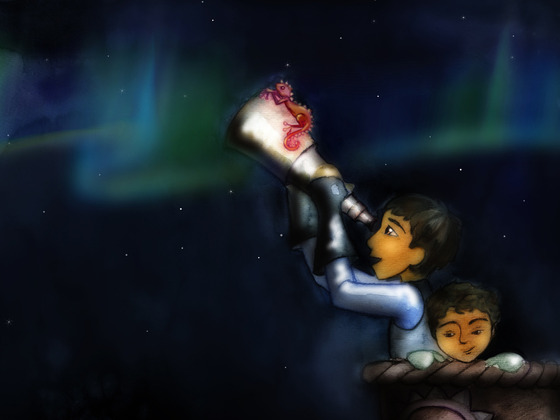
Keeper of the Stars, by Aubrey Jewel - "A tale of the magic found in the night sky in the form of an animated story." This looks like a lovely book for kids, young and old alike.


Fabulous artist Therese Obergottsberger is looking for some help getting her her work scanned and ready for a showing in New York in December. She's an amazing talent!


Diary of a Champion -- Looks like the kind of sports story I'd love to see. And the cast list is impressive.
When your passion and talent don't seem to be enough, the lengths one will go are detrimental. Following the story of Track & Field star Tahja Dupree, “Diary of a Champion” explores the politics and scandal behind the doors of competition between prominent track athletes and coaches preparing for the 2016 games.


And finally, just in time for the holi-daze, check out Heather "Cloe" Bloss' Spoonful of Cats Holiday Cards. I mean, who doesn't like cute cats in holiday scenes?


What KickStarter projects are you following?

Tuesday, July 24, 2012

Happy Birthday Lynda Carter

We all know her as Wonder Woman. The television show ran in the late-1970s, and it was one of my favorites! I mean, this woman could kick some serious ass!


Of course, even at that age, I questioned why she had to wear her Amazonian swim suit to catch the baddies. Superman at least got a full-body suit and a cape, in case he got cold, right?


After the show ended, she sorta fell off my radar until I saw her in a television ad for contacts or something. But, as it turns out, she hasn't been sitting at home polishing her tiara (oh, and what a tiara it was!). No, she's been acting in various television and movie roles. And voice acting. Did you know she did some voices for Skyrim? Huh.


But most surprising to me is her singing! I mean, I recall she did some duets with other singers on those celebrity variety shows back in the day, but it just seemed like something everyone did. But she's still performing with her own band!

Happy Birthday Lynda Carter!

Friday, July 20, 2012

Blog Around

Geek Mom has a post about a great new CD for science geeks: Science Fair.
The songs of Science Fair are all performed by women and girls, including some kids’ music greats like Frances England, Elizabeth Mitchell, Lunch Money, Renee & Jeremy, and Ashley Albert of The Jimmies. The musical styles represented are as diverse as the science topics, from hip hop to rock to folk, phytoplankton to fossils to outer space. The album name drops Feynman, Heisenberg, Einstein, Bohr, Newton, Schrödinger, with a terrific ukelele-filled song dedicated to Marie Curie.


Speaking of women in science, the Elsevier Foundation, The Academy of Sciences for the Developing worls (TWAS) and the Organization for Women in Science for the Developing World (OWSD) have launched an awards program for women scientists in developing countries.


Valerie Weiss has an excellent post on indiewire.com about the problems of portraying science in the media: Women, Science and Film.
1. Girls are not dumb. They have interests outside of the world of Abercrombie or Forever 21. They are actually just as discerning as you and me and can tell when they’re fed dumbed-down messages.
2. Science can actually be cool. Why else would there be news reports on the search for dark energy and why else would we care about the race to find a cure for cancer? Why else would people actually study it?


In this Word & Film interview, the fabulous Kristen Scott Thomas dishes about being an older woman in Hollywood and why she prefers to make movies in Europe these days.
“The Hollywood film industry nourishes everything else because that’s the mother hand, but it’s true: The movies I’m making in Europe are more exciting to me than the things I’ve been asked to do recently coming out of America. That doesn’t mean to say I don’t want to do them anymore, but when you have even a much smaller part, it’s so exciting. And in Europe, they’re interested in women of my age. I don’t think that here they are.” 

Have you ever thought that computer science should include more dragons and wizards? Well, you're in luck! Computational Fairy Tales is here to save the day!


Did you hear Maureen Corrigan's NPR review of Caitlin Moran's book, How To Be A Woman?
But, more importantly, like Barr used to do, Moran invests her consciousness-raising confessions with an all-too-rare working-class worldview.

The Colorado Shakespeare Festival is presenting a five-part piece called Women of Will, created by Tina Packer, which will explore the female roles in Shakespeare's plays.
Packer's theory is that Shakespeare's changing approach to women over the years illustrates his own ever-evolving complexity of thought and understanding. Women in his time, she points out, were necessarily shrewd observers, analysts of the power structure and their own place within it.


The Comic's Journal has a review of a new publication of Flannery O'Connor's lineoleum cut cartoons she made while in high school and college.
I think the significance of O’Connor’s cartoons lies not in their connection to her fiction but the gap between them. That they stand so puny and so far from her writing speaks to the wonder of the creative process. They attest to the mind’s capacity to access and master dangerous and potentially self-devouring material in ways that can not be foreseen, for which logic can construct no model for others to follow. 


I've seen some photos of awesome swag people are bringing home from San Diego Comic-Con, but I'm pretty that Mercedes Becerra has them all beat. She scored a ticket to space!


The SF Gate had a great piece about Dona Bailey, the woman who helped create the iconic arcade game Centipede.
"It was interesting to see how a male society functioned," she says. "It was kind of rough sometimes, too. It was a culture that I don't think they were thinking 'there is one woman, we should modify our behavior for her sake' ... I grew a thicker skin."


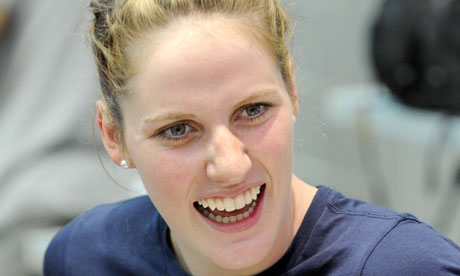
Meet Missy Franklin, who will soon become the first US woman to swim in seven events in one Olympic Games. She's definitely someone to watch. According to Teri McKeever, the head coach of the US Olympic women's swimming team.
"Missy is definitely the marquee female athlete on this Olympic team and probably has the highest expectations. Our job as coaches is to help her manoeuvre those and help her stay true to who she is."


Sabera Talukder, 16 years old, invented an inexpensive and portable water purification sysmter for developing countries, and became a finalist in the Google Science Fair.

Tuesday, July 17, 2012

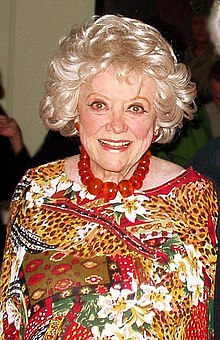
Happy Birthday Phyllis Diller

Phyllis Diller is 95 today!


I have always loved Phyllis Diller. I grew up with her all over the TV and late night shows. Her comedy was genius -- always making fun of herself, her husband "Fang," and generally taking pot shots at social beauty norms.


Her jokes might seem to be regressive on the surface, but they're really quite subversive. Like Erma Bombeck and, later, Roseanne, she reveled in her supposed inability to be the perfect house wife.
Cleaning your house while your kids are still growing up is like shoveling the walk before it stops snowing.

It's this kind of humor that helped to take the pressure off many women during the 60s and 70s, and even 80s, letting them laugh at their so-called short-comings.
Housework can't kill you, but why take a chance?
And instead of working hard to fit the beauty standards of the day, she went in the opposite direction. It's the classic I know you're going to laugh at me, so I'll really give you something to laugh at approach.


As a child, I loved her wacky sense of humor. I always loved seeing adults breaking the social norms. And Phyllis broke them all to teeny tiny pieces. I still remember her appearance on The Muppet Show.

As an adult, I love how she busted up the notion of how older women were supposed to act or look. By the time I "met" her in the 70s, she was already in her late-50s and early-60s. I love that she's loud, she takes up space, she isn't grandmotherly or dottering. It's like she became my internalized version of me at that age. Well, without the pink and yellow feather dress, of course.

Happy Birthday, Phyllis!

SRPS TV Night - British women make great detectives!

I have been watching lots of TV series on Netflix on the PS3. It's pretty cool how as soon as I finish a series, the Netflix app gives me three suggestions based on what I just watched. I can chain shows pretty easily, without having to do any searching.

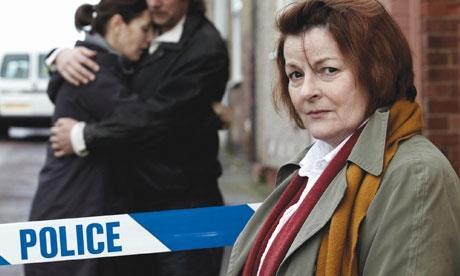
One show I watched recently was Vera. Just seeing the cover, I know it's got Brenda Blethyn, one of my favorites. You may recognize her as Mrs. Bennett from the Pride and Prejudice movie with Keira Knightly, or as the mother from Secrets and Lies, or as the widow in Saving Grace. All three are great SRPS movies.  So, already I knew this was going to be a great SRPS television series. Also, interestingly, she was in a movie entitled The Witches with Anjelica Huston.


I was not disappointed one bit. Well, I was disappointed with the fact that there are so few episodes, but as any BBC series fan knows, that's the price we pay for excellent stories.

Based on the heroine of Ann Cleeves series, Vera is like a kind-but-tough country grandma-turned-police detective. Not exactly a Columbo-type, though. She's not exactly self-deprecating. She's tough. She'll yell and put the fear of God into her staff when she needs to. But she's also kind and clearly a caring member of her local community. Or, as Brenda Blethyn says of her character:
"She's kind of like an ordinary person really. If you sat next to her on the bus and struck up a conversation you'd probably be talking about the two-for-one pries down at the Co-op."

Only season 1 is available on Netflix at this time. One of my favorite episodes is about a murder associated with a controversial quarry project. It's not just the story, but the great roles and performances for everyone involved. The characters are well-developed, complex people with mixed desires. I cannot wait to get my hands on season 2. It has immediately been added to my wish list.

Once I was finished with Vera, Netflix suggested Blue Murder. I have to admit I was a teeny bit skeptical after watching the first 10 minutes. The production values are very different, and not only because the show is a few years older. But I was also intrigued by the premise of a single mother trying to handle raising her children, who is also pregnant, serving as a detective.


In season 1, one of my most favorite storyline was between Janine and her neighbor and friend, Leslie. It's just the real-kind of friendship you'd expect between friendly neighbors helping each other out.

While Vera never really delved into Vera's private life, Blue Murder spends a good amount of time showing us Janine's personal struggles and accomplishments as well as her detective work. And I think that's what I like the most about this show. The investigations are exciting, and usually involve some kind of clever twist, but it's nice to see how Janine juggles her personal responsibilities as a single mother, handling issues with her children and her estranged husband, exploring romantic possibilities, and just trying to keep everything together.

While the series ran for five seasons, from 2003 to 2009, Netflix only has seasons 1 and 2. You can be certain I'll be searching out the last three seasons.

Monday, July 16, 2012

SRPS Shout Out - Dr. Emily Stowe

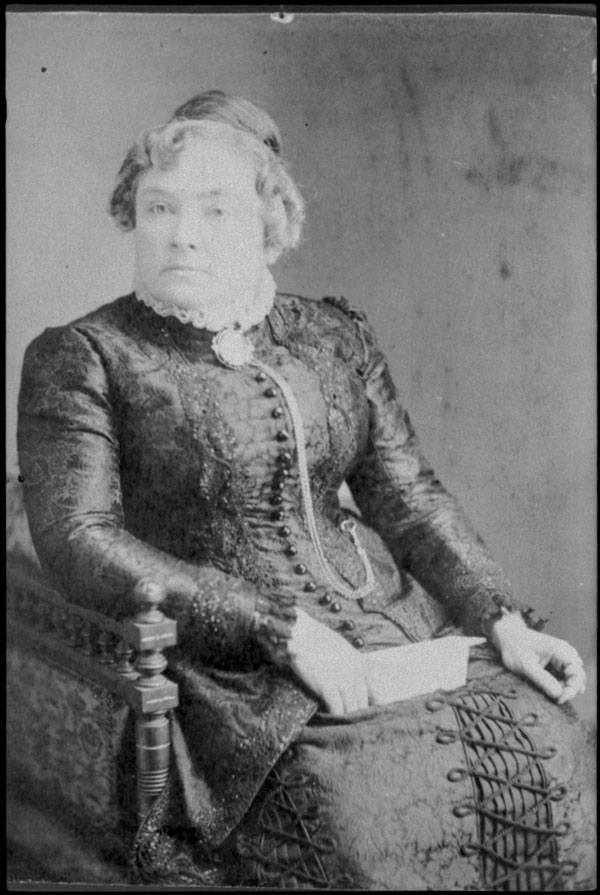
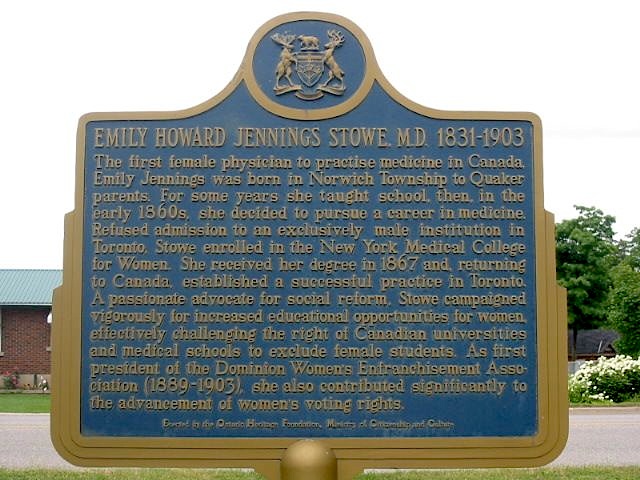
On July 16, 1880, Emily Howard Stowe, a life long suffragist and woman's rights activist, became the first female physician to practice in Canada.


Emily Howard Jennings was born in 1831 on a farm in Norwich Township in Upper Canada (now Ontario), the first of six daughters of a Methodist father and a Quaker mother. Emily's mother had been well-educated at an American Quaker seminary and believed in a good education for her daughters. She was so dissatisfied with the local schools that she chose to instruct all her children herself.
At age 15, Emily became a teacher in a one-room schoolhouse in neighbouring Summerville, where she taught for seven years. Her struggle to achieve equal opportunities for women began in 1852 when she applied for admission to Victoria College, in Cobourg, but was refused because she was female. She was, however, accepted by Toronto’s Normal School for Upper Canada, the only advanced school open to women in British North America. She graduated with first-class honors in 1854. 

She took a teaching position at the Brantford School Board, and quickly moved up to become the first woman principal of a public school in Upper Canada. After she married John Stowe, they moved to Pleasantville and started a family.
Soon after the birth of John and Emily Stowe's third child, John contracted tuberculosis. His illness inspired Emily to explore the field of herbal healing and homeopathic medicine, an area her mother had studied. This, together with what she saw as a serious need for women doctors, led to her decision to become a physician.
In 1865, Emily Stowe applied to the Toronto School of Medicine, but once again, she was denied admission. "The doors of the University are not open to women and I trust they never will be," the University's vice-president told her. Stowe was outraged. She promised herself that she would do everything possible to enable women to have the same opportunities as men. Unable to study in Canada, she moved to the United States and enrolled at the New York Medical College for Women, a homeopathic institution in the city of New York. She obtained her degree in 1867 and returned to Canada and set up a practice in homeopathic medicine on Richmond Street in Toronto, even before obtaining her license. She thus became the first practising female physician in Canada.

Even after she received her degree in the US, she was not allowed to enter the University of Toronto, until 1871. And then only with a special arrangement to allow her and another woman, Jenny Trout, to attend the lectures.
It was a difficult period for both of these women, since students and faculty went out of their way to humiliate them. Dr. Stowe either failed her exams or defiantly refused to sit them and returned to her practice, still without a licence. Jenny Trout passed her exams and became the first licensed female physician in Canada.

Her work to be accepted into the medical profession, reinforced her feminist ideals. She continued to fight for the rights of women throughout her life. In 1877, she helped to found the Toronto Women's Literary Guild, a suffragette group with the aim of improving women's working conditions. The group work hard to open up higher education opportunities for women in Toronto, and they succeeded. In 1883, their name was changed to the Canadian Women's Suffrage Association, and their reach was extended to all of Canada.
Meanwhile, Dr. Stowe continued her medical practice, specializing in women and children and giving lectures on women's health. In 1879, she was charged with performing an abortion on one of her patients. She faced a long and intimidating trial during which her qualifications were scrutinized and members of Toronto's medical establishment were called to bear witness to her character, skill and professional conduct. In the end, she was acquitted.
The next year, she was finally granted her medical licence by the College of Physicians and Surgeons of Ontario, making her the second licensed female physician in Canada.

She continued to fight for the rights of women to pursue the medical profession. She worked tirelessly to convince the University of Toronto to reverse its policy and allow women into their program. In fact, perhaps her proudest moment in life can in 1883 when her own daughter, Augusta Stowe-Gullen, was the first women doctor to graduate from a Canadian medical school.
The same year that Dr. Stowe's daughter graduated from medical school, a public meeting of the Toronto Women's Suffrage Association, with Dr. Stowe at the forefront, led to the creation of the Ontario Medical College for Women.
In 1888, Dr. Stowe attended an international conference of suffragettes in Washington, D.C. She returned home to revitalize the women's movement in Canada and continued the fight to win the vote for women. Her vehicle was the Dominion Women's Enfranchisement Association, which she founded in 1889. She became its first president and held the position until her death.
(source: Library and Archives Canada)